UV-Resistant Doormats for Sun-Drenched Entryways
Most entryway mats are designed to fail the moment they meet a direct summer afternoon. You've likely experienced the frustration of watching a vibrant coir mat bleach into a brittle, shedding eyesore within a single season. It's an exhausting cycle of replacement that often leaves melted rubber residue clinging to expensive bluestone or composite decking. Investing in a truly uv resistant doormat shouldn't be a seasonal chore. It should be an architectural decision for your home sanctuary.
We'll explore how marine-grade polymer engineering and proprietary mathematical weaving techniques protect your entryway against solar degradation and structural breakdown. This guide reveals the science of solution-dyed fibers that maintain deep coloration under intense light. You'll learn why bespoke marine rope is the premier investment for homeowners who value performance and permanent curb appeal. We'll also cover the effortless maintenance protocol that keeps these architectural anchors looking pristine for years.
Key Takeaways
- Understand how solar radiation causes irreversible photodegradation in traditional fibers. Learn why engineered marine polymers remain structurally sound.
- Discover why a high-performance uv resistant doormat requires ultraviolet inhibitors integrated during the extrusion process rather than simple topical coatings.
- Select bold nautical striping or gradient wave designs to establish a balanced visual anchor for sun-drenched architectural entrances.
- Explore how free-draining weave structures eliminate heavy cleaning by allowing sand and salt to pass through the rope coils harmlessly.
- Experience the difference of architectural longevity with entryway anchors built using specialized equipment and proprietary, mathematically calculated weave lengths.
The Science of Solar Exposure: Why Conventional Doormats Fail Outdoors
A sun-drenched entryway is a double-edged sword for the curated home. While natural light highlights the rich textures of architectural stone and timber, it simultaneously acts as a silent, destructive force on standard outdoor decor. Understanding The Science of Solar Exposure is vital for anyone looking to maintain a pristine portico. Solar radiation triggers irreversible chemical changes within low-grade synthetic polymers and organic fibers, leading to structural collapse. For the discerning homeowner, a truly uv resistant doormat isn't a luxury; it's a necessary safeguard for the entryway's integrity.
Photodegradation and the Premature Death of Outdoor Fibers
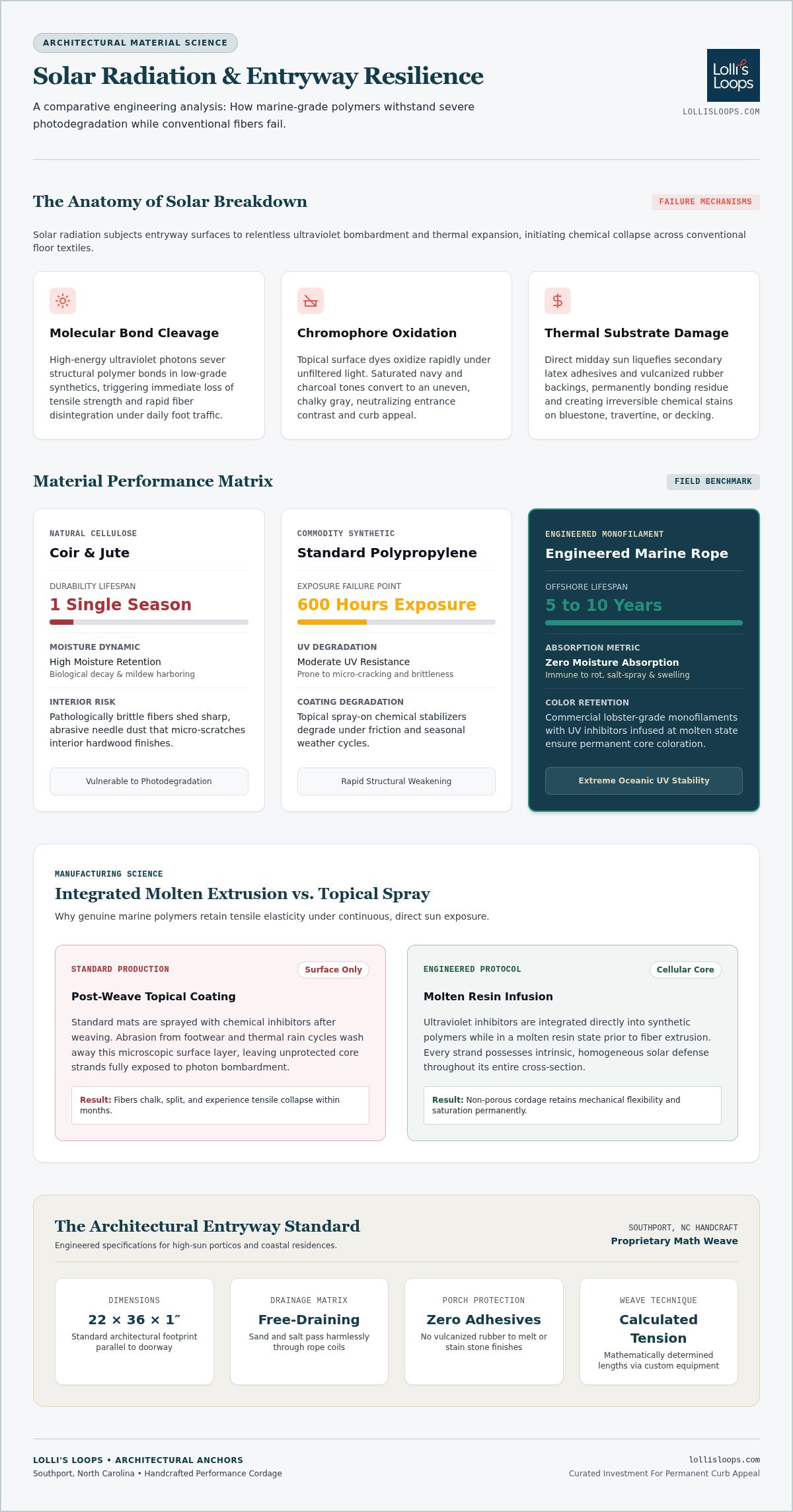
Ultraviolet photons possess enough energy to sever molecular polymer bonds. This process leads to rapid tensile strength loss, causing once-sturdy fibers to crumble under foot traffic. Surface dyes oxidize under this constant bombardment. Deep navy and charcoal tones quickly transform into a tired, chalky gray, stripping the entryway of its visual contrast. Natural materials like coir fare even worse. The bristles become pathologically brittle. They don't just fade; they shed abrasive, needle-like dust that clings to fine indoor hardwood, causing micro-scratches that ruin expensive floor finishes.
The Hidden Danger of Vulcanized Rubber and Latex Backings
Perhaps more insidious is the behavior of petroleum-based adhesives and vulcanized rubber backings under heat. Direct afternoon sun bakes these materials, driving temperatures far beyond ambient levels. This intense thermal energy causes cheap secondary latex backings to soften and bond to the surface beneath them. Whether you have bluestone, travertine, or high-end composite decking, the result is the same: permanent chemical staining. These sticky transfers are nearly impossible to remove without damaging the substrate.
By choosing an engineered alternative like the black sand and blue signature stripe rope doormat, you eliminate the need for these destructive backings entirely. It's a strategic move to protect a substantial investment in your home's exterior aesthetic. Replacing bleached, rotting mats every season is a recurring cost that adds no value. It's time to move past seasonal retail replacements and look toward architectural longevity. Engineered materials offer stability where traditional fibers fail.
Evaluating Outdoor Materials: Marine Polymers Versus Traditional Fibers
Curb appeal relies on material integrity. When Evaluating Outdoor Materials, homeowners often prioritize texture and tone without considering the chemical resilience required to survive unfiltered sunlight. Finding a truly uv resistant doormat requires looking beyond the aesthetic veneer and into the molecular composition of the fibers. While standard retail options rely on surface treatments, architectural anchors utilize advanced polymer science to maintain their structural body and color depth across multiple seasons.
The Performance Comparison Matrix:
- Natural Coir and Jute: Low UV stability, high moisture retention, and a lifespan typically limited to a single season.
- Standard Polypropylene: Moderate UV resistance, but prone to becoming brittle and cracking after 600 hours of intense exposure.
- Engineered Marine-Grade Rope: Extreme UV stability, zero moisture absorption, and an expected lifespan of 5 to 10 years in offshore environments.
Marine-Grade Polypropylene: Engineered for Oceanic Radiation
Commercial lobster fishermen don't use materials that fail. They rely on heavy-duty synthetic polymers engineered to withstand continuous, unfiltered solar radiation and saltwater saturation. These marine filaments incorporate ultraviolet inhibitors directly into the molten resin during the extrusion process. This isn't a topical spray; it's a structural safeguard. The result is a non-porous monofilament that resists thermal cracking and maintains its elasticity even when baked on a sun-drenched portico. It's an investment in stability that mass-produced alternatives simply cannot match.
Why Natural Coir, Jute, and Painted Mats Disintegrate
Natural cellulose fibers are biologically destined to fail outdoors. They inevitably hold ambient humidity, which creates a breeding ground for fungal rot when trapped beneath direct sunlight. The constant cycle of rain and solar baking causes these fibers to decompose at a cellular level. Furthermore, many decorative mats use topical stenciled paints that peel away under moderate friction. For a deeper dive into these technical failures, read our comparative analysis on lobster rope vs coir doormat for complete material testing insights.
Solution Dyeing Versus Surface Printing
Color longevity is a matter of physics. Surface-printed designs create a thin aesthetic veneer that quickly wears under heavy foot traffic and UV bombardment. In contrast, solution dyeing locks rich colorants deep inside the synthetic polymer matrix while it's still in a molten state. This ensures uniform saturation completely through each structural strand. If you cut a strand of our marine rope, you'll find the pigmentation is identical from the core to the exterior surface. If you have questions about specific color stability for your home, feel free to reach out to our Southport studio for personalized guidance.
Architectural Curb Appeal: Selecting Patterns for High-Sun Porticos
An entryway mat is more than a tool for capturing grit; it's a structural visual anchor. In the context of grand residential facades, it defines the threshold. A high-performance uv resistant doormat serves as the focal point for architectural entrances, grounding the space between expansive masonry and refined timber doors. Bold nautical striping establishes a sense of balanced perspective, particularly across wide, sun-drenched porticos. By selecting curated coastal palettes, you reflect the surrounding natural elements while ensuring the mat resists the visible accumulation of dust and the inevitable bleaching of the afternoon sun.
Contrast and Palette: Designing for Unfiltered Sunlight
Midday ambient glare is relentless. It flattens textures and washes out weak pigments. To maintain visual integrity, you must prioritize high-contrast combinations. Deep, saturated tones hold their ground against the brilliance of unfiltered light. Incorporating rich palettes, such as our black sand and blue signature stripe rope doormat, provides a dramatic yet balanced contrast against light-colored stone or decking. Neutral tans, crisp navy blues, and sea-inspired greens effortlessly complement modern exterior masonry, creating a curated look that feels both timeless and contemporary.
Proportion and Scale for Grand Residential Facades
Proportions matter in luxury design. Standard mass-market dimensions often leave expansive double doors looking disproportionate and incomplete. A small mat looks lost against a grand facade. It signals a lack of intentionality. For homes with sidelights or wide entryways, generous footprints are essential. They ensure that every footstep lands cleanly on the mat before guests enter the home. A larger mat also provides more surface area for the engineered weave to trap debris. Beyond aesthetics, weight is a critical factor for exterior stability. You can review the benefits of lobster rope doormats for weight specifications that keep these bespoke anchors firm during high-wind events. Selecting a uv resistant doormat that matches the architectural scale of your entrance is a final, vital step in securing long-term curb appeal.
Maintenance Protocols: Sustaining Solar Performance and Color Depth
Architectural investments deserve a maintenance philosophy that matches their engineering. While mass-market retailers suggest avoiding water to prevent mildew, a high-performance uv resistant doormat thrives with regular rinsing. The secret lies in the proprietary weave. These engineered structures allow fine dirt particles, ocean salt, and abrasive sand to filter harmlessly through the rope coils rather than becoming trapped in the fiber bed. This free-draining geometry ensures water exits rapidly, effectively preventing the damp, dark environments where mildew typically incubates. By eliminating trapped subterranean moisture, you protect expensive bluestone or mahogany decking from the rot and discoloration that often occurs under rubber-backed alternatives.
The Four-Step Cleansing Ritual for Engineered Rope
Maintaining the deep coloration of your mat doesn't require industrial chemicals or specialized tools. It's a simple, rhythmic process. First, lift the mat to expose the trapped debris resting underneath; the open weave makes this effortless. Second, rinse the mat thoroughly using standard household garden hose pressure to flush out accumulated pollen and salt spray. For stubborn soils, apply a mild liquid dish soap with a soft bristle brush to gently lift the stain. Finally, consult our complete guide on how to clean a rope doormat for specific seasonal maintenance tips that ensure your entryway remains a curated sanctuary.
Uncovered Porch Survival: Managing Rain, Salt, and Solar Heat
Coastal squalls and intense solar heat are the primary enemies of exterior decor. However, marine-grade synthetic polymers are inherently hydrophobic. They don't absorb water, which prevents the fiber swelling and shape distortion common in natural jute or coir. The open weave permits direct airflow, allowing the fibers to dry swiftly even after a heavy downpour. This structural integrity means you can leave your entryway anchors uncovered year-round without fear of degradation. The original tension of the weave remains firm, and the colors stay vibrant. If you need assistance selecting the right palette for your specific exposure levels, you can reach out to our Southport studio for personalized advice on maintaining your investment.
The Artisan Standard: Handcrafted Engineering by Lolli's Loops
True architectural quality is never accidental. While we've explored the chemical resilience and maintenance of a high-performance uv resistant doormat, the final pillar of longevity is the construction itself. Lolli's Loops builds entryway anchors engineered to conquer the harshest coastal elements. Our process bridges the gap between traditional manual artistry and modern mechanical precision. Every mat we produce is a bespoke investment in your home's exterior aesthetic, designed to serve as a permanent structural anchor rather than a transient seasonal accessory.
Proprietary Tight-Weave Structural Engineering
Generic mats often rely on loose hand-knotting, which inevitably leads to shifting, distortion, and trip hazards. We utilize specialized proprietary equipment to mathematically determine optimal weave lengths for every design. This custom engineering maintains a precise mechanical tension that hand-knotting simply cannot replicate. The result is a denser, firmer structural body that resists edge curling. It provides a smooth, stable transition for guests and heavy footwear. Tightly bound marine rope maintains its geometric rectangular form under constant daily use, ensuring your portico remains a curated sanctuary.
The Non-Shedding Guarantee and Bespoke Commissioning
A premium home shouldn't suffer the indignity of messy fibers tracked across interior thresholds. Our explicit Non-Shedding Guarantee promises that your mat will never contribute to the debris it's designed to stop. Because we operate on a made-to-order basis, each mat undergoes rigorous quality control during our four to six week production timeline. This deliberate pace ensures that every architectural anchor meets our master artisan standards. Bespoke dimensions are available to accommodate grand entryway porticos, guest houses, and expansive covered verandas perfectly.
Investing in a uv resistant doormat from our studio means choosing permanence over the cycle of replacement. You can discover our curated designs across the best selling rope doormats for proven coastal sophistication. To fully understand our architectural heritage and the materials we employ, explore the definitive guide to lobster rope doormats. Select an enduring architectural accent via the Lolli's Loops storefront today.
Securing the Future of Your Sun-Drenched Entryway
Choosing the right exterior accent is a commitment to your home's long-term architectural integrity. We have explored how conventional materials surrender to solar degradation, while engineered marine filaments remain impervious to the harshest ultraviolet rays. By prioritizing technical performance alongside curated aesthetics, you ensure your portico remains a vibrant, welcoming sanctuary regardless of the season. A truly uv resistant doormat serves as a permanent anchor that resists the cycle of bleaching and rot common in mass-market alternatives.
Our proprietary tight-weave engineering provides the structural stability needed for grand entrances, while our 100% Non-Shedding Guarantee protects your interior luxury flooring from abrasive debris. These aren't just mats; they are bespoke performance pieces designed to endure authentic oceanic radiation. It's time to elevate your curb appeal with materials that actually last. Invest in Architectural Entryway Elegance with Lolli's Loops and experience the difference of maritime craftsmanship. Your home deserves an entryway that stands as strong as the architecture it protects.
Frequently Asked Questions
What makes a doormat truly UV resistant in direct sunlight?
A truly uv resistant doormat relies on advanced polymer engineering rather than temporary topical sprays. We exclusively use heavy-duty marine-grade rope where ultraviolet inhibitors are integrated directly into the molten resin during the extrusion process. This molecular stability prevents the fiber from becoming brittle or losing its tensile strength when subjected to intense solar radiation. It ensures your entryway anchor remains structurally sound and visually striking despite constant exposure to the elements.
Will an outdoor marine rope doormat fade after prolonged sun exposure?
Our mats are designed to maintain their rich visual contrast through the solution-dyeing process. Unlike traditional mats with surface-printed designs that bleach under the sun, marine filaments lock pigmentation deep inside the polymer matrix. The color is uniform from the core to the surface. This ensures that curated coastal palettes, like our deep blues and charcoal sands, stay vibrant and resist the washed-out appearance common in retail alternatives.
Can UV resistant rope doormats stay outside in heavy rain and snow?
These architectural anchors are engineered to remain outdoors year-round in all weather conditions. The open-weave geometry allows rain, slush, and snow to pass straight through the coils, preventing the moisture retention that leads to fungal rot. Because the synthetic polymers are naturally hydrophobic, they don't swell or distort like natural fibers. Your uv resistant doormat will maintain its precise rectangular form and structural integrity through sudden coastal squalls and heavy winter accumulation.
How do I clean an all-weather marine rope doormat effectively?
Cleaning your engineered rope mat is an effortless ritual that requires nothing more than a standard garden hose. The free-draining weave allows you to flush out airborne pollen, ocean salt, and abrasive sand with simple water pressure. For stubborn soils, a light application of mild liquid dish soap and a soft bristle brush will restore the mat's original luster. Avoid industrial solvents or degreasers, as these are unnecessary for maintaining the high-performance finish of our bespoke weaves.
Do marine rope doormats damage wood, stone, or composite decking?
Our mats are specifically designed to protect expensive architectural surfaces like bluestone, mahogany, and composite decking. We never use rubber or latex backings, which are notorious for melting and bonding to decks under intense solar heat. The proprietary tight-weave construction permits continuous airflow beneath the mat. This prevents the trapped subterranean moisture that causes rot, staining, and chemical transfer, ensuring your investment in high-end flooring remains completely pristine.
How does an engineered rope doormat prevent shedding compared to coir?
We provide an explicit Non-Shedding Guarantee because our mats use heavy-duty marine monofilaments instead of brittle organic cellulose. Traditional coir mats are composed of short, dry bristles that inevitably break and track into your home, causing micro-scratches on fine hardwood floors. Our engineered rope is woven with continuous, high-tensile strands that stay locked in place. You won't find messy fibers clinging to your interior rugs or clogging your entryway threshold.
Why is a four to six week lead time required for custom rope doormats?
Every bespoke entryway anchor is handcrafted to order in our workshop. We mathematically determine optimal weave lengths and use specialized proprietary equipment to ensure a firmer, tighter finish. This meticulous engineering process, combined with our commitment to rigorous quality control, necessitates a four to six week production lead time. We prioritize architectural longevity and precision over mass-produced speed, ensuring every custom commission meets our exacting artisan standards before it reaches your home.