

How to Clean a Rope Doormat: The 2026 Guide to Lasting Coastal Beauty
What if the secret to a pristine coastal entryway isn't about fighting the elements, but rather understanding how to work with them? You chose a hand-woven piece for its rugged durability and refined artistry, yet the inevitable buildup of salt crust and trapped sand can make even the finest weave look tired. Learning how to clean a rope doormat doesn't have to be a delicate or daunting task. You don't need to fear damaging those expensive fibers with the wrong detergent. Instead, you can rely on the same resilience that protects lobster traps in the deep Atlantic.
It's a common worry that a deep scrub might unravel the heritage of your mat; however, marine-grade rope is built for a different kind of endurance. We promise to help you master simple, effective techniques to restore your doormat to its original artisan brilliance. This guide explores the methodical steps for clearing the breathing space within the weave. You will learn a quick, repeatable routine that removes every grain of sand and salt. We will also clarify exactly when to reach for the hose and how to safely use a pressure washer to ensure your coastal sanctuary remains anchored in beauty for years.
Key Takeaways
- Understand why marine-grade lobster rope is engineered to resist absorption, ensuring your mat stands up to the harshest coastal elements.
- Master the methodical steps of how to clean a rope doormat using a high-pressure garden hose to flush out deeply trapped sand and debris.
- Learn to dissolve stubborn salt crusts and clear organic grime without damaging the intricate, hand-woven patterns of your mat.
- Discover the critical maintenance mistakes to avoid, including the use of industrial heat or abrasive tools that can compromise structural integrity.
- Find out how a premium tight-weave design, like our Wave Pattern Doormat, simplifies your routine by preventing debris from becoming embedded.
Understanding Your Marine-Grade Rope Mat’s Resilience
Marine-grade lobster rope is a triumph of engineering. It's born from the necessity of the sea, where materials must endure the crushing weight of the tide and the abrasive bite of salt. This isn't your standard craft store cordage. It's a non-absorbent, synthetic fiber designed to live in the water without surrendering its strength. When you understand the science of the material, learning how to clean a rope doormat becomes a simple act of preservation rather than a chore.
The secret lies in the open-weave architecture. This deliberate design creates a breathable grid that allows heavy sand and grit to pass straight through the mat. Instead of holding onto the dirt like a sponge, the weave acts as a filter. It keeps your entryway looking pristine while the debris settles harmlessly underneath, waiting for a quick sweep. By understanding rope construction, one begins to see why these synthetic fibers are far superior to jute or sisal when facing an unpredictable coastal climate.
Contrast this with a traditional coir mat. While coir has a rustic appeal, it's essentially a bundle of organic fibers that trap moisture and rot over time. It becomes heavy, soggy, and eventually harbors a musty scent that no amount of scrubbing can fix. The 2026 standard for an all-weather entryway is defined by resilience. Today's homeowners demand a performance-driven foundation that resists the elements as effectively as a sea-bound vessel, ensuring the home remains a curated sanctuary in every season.
Why Lobster Rope Defies Mold and Mildew
The polypropylene composition of our rope is naturally hostile to organic growth. Because the fibers don't absorb water, they provide no anchor for mold or mildew to take hold. This durability is enhanced by the absence of a rubber backing. Without a solid base to trap dampness, the mat enjoys 360-degree airflow, allowing it to dry rapidly even after a torrential downpour. Non-porous fibers act as a permanent shield against liquid absorption, serving as the hidden secret to exceptional stain resistance in every weave.
The Role of UV Resistance in Color Longevity
Color is not an afterthought in marine-grade rope. It's dyed to the core during the extrusion process, meaning the pigment is part of the fiber itself rather than a surface-level print. This allows for aggressive cleaning without any fear of fading or bleeding. Because the rope is designed for marine use, the process of how to clean a rope doormat allows for a thorough, deep rinse that would ruin a standard store-bought mat. Pieces like our Signature Stripe Doormat showcase this lasting vibrancy, maintaining their bold, coastal hues through years of direct sunlight and heavy foot traffic.
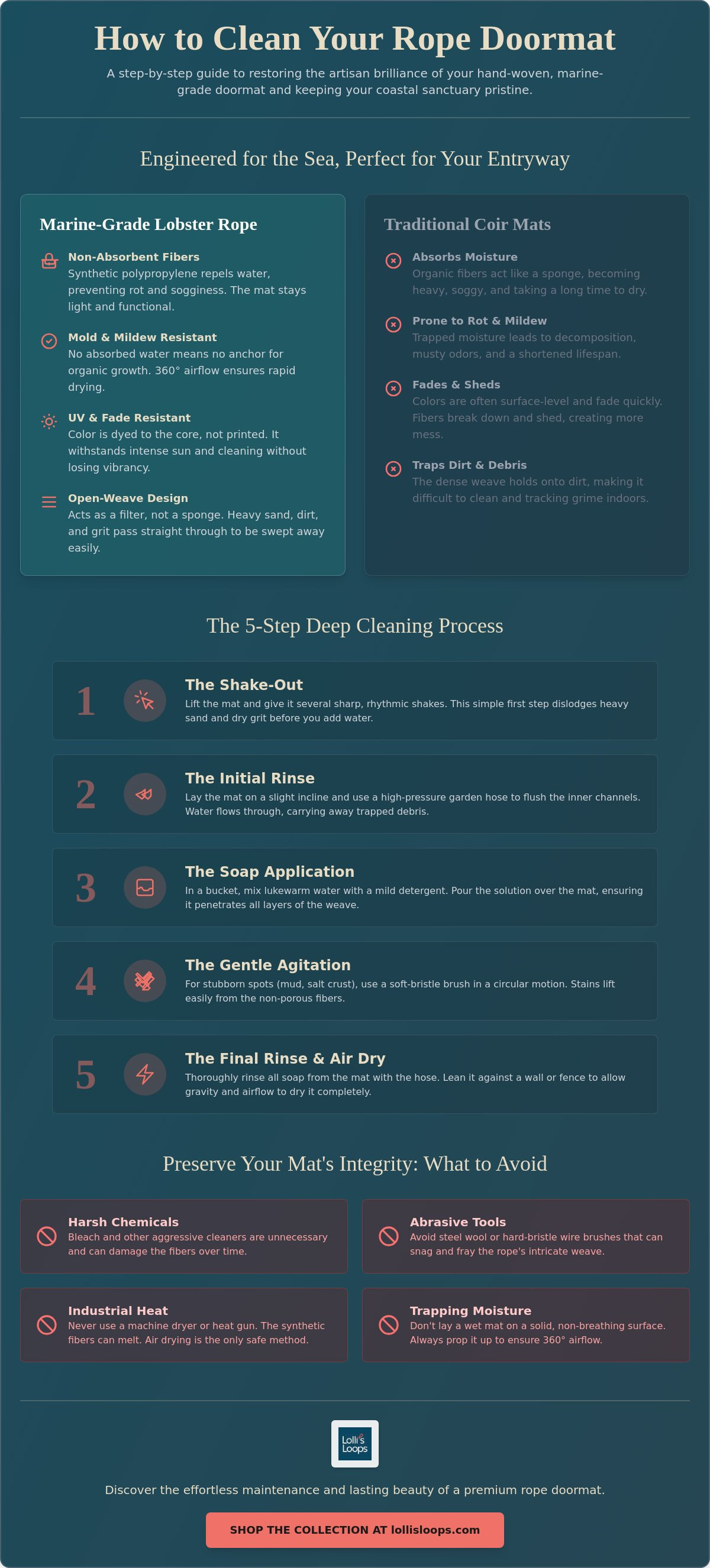
The 5-Step Deep Cleaning Process for Rope Doormats
Restoring the artisan brilliance of your mat is a straightforward ritual. It doesn't require specialized machinery or a professional crew. Because the rope is engineered for the rigors of the North Atlantic, it responds beautifully to a methodical cleaning routine. Follow these five steps to ensure your entryway remains a welcoming sanctuary.
- Step 1: The Shake-Out. Lift your mat by a sturdy corner and give it several sharp, rhythmic shakes. This dislodges the heavy sand and dry grit that has settled deep within the weave. It's a simple act that prevents you from turning dry dust into mud during the wet phase of the process.
- Step 2: The Initial Rinse. Lay the mat on a slight incline, such as a driveway or a deck. Use a high-pressure garden hose to flush the inner channels. This is the cornerstone of how to clean a rope doormat. The water should flow through the open-weave architecture, carrying away any debris that the shake-out missed.
- Step 3: The Soap Application. Prepare a bucket of lukewarm water mixed with a mild detergent. You don't need aggressive chemicals to lift surface grime. Pour the solution over the mat, ensuring it penetrates the layers of the weave.
- Step 4: The Gentle Agitation. If you notice stubborn spots from crushed leaves or mud, reach for a soft-bristle brush. Gently work the bristles into the rope in a circular motion. The non-porous nature of the fiber means most stains sit on the surface, making them easy to lift without heavy scrubbing.
- Step 5: The Air Dry. Lean the mat against a wall or fence. Gravity is your best friend here. It pulls the moisture through the weave, allowing for rapid and total evaporation. Never place a wet mat flat on the ground, as this hinders the 360-degree airflow required for a crisp finish.
Choosing the Right Cleaning Agents
Stick to the basics when selecting your cleansers. A mild dish soap or a simple vinegar-water solution is usually enough to maintain the rope's luster. For those seeking expert advice on cleaning marine rope, professionals suggest avoiding industrial degreasers that can strip the rope's protective finish. In rare cases involving organic stains like bird droppings or berries, a very dilute bleach solution is acceptable. Always rinse the mat thoroughly afterward to preserve the fiber's integrity.
Mastering the Power Washer Technique
A power washer is a highly effective tool for seasonal maintenance if used with care. Keep the pressure between 1,200 and 1,500 PSI to avoid fraying the proprietary tight-weave of your mat. Position the nozzle at least 12 inches away from the surface. Use a broad, sweeping motion rather than focusing the stream on a single spot. This ensures an even clean across the entire surface without stressing the hand-woven bonds. If you have questions about a specific stain, you can always reach out to our studio for personalized care tips.
Targeted Stain Removal: Salt, Sand, and Seasonal Grime
Dirt is rarely a monolith. In a coastal environment, your entryway faces a specific cocktail of crystalline salt, fine sand, and organic debris. To truly master how to clean a rope doormat, you must look beyond a simple surface rinse. Before addressing the mat itself, always sweep the "stoop" or porch surface beneath it. This simple, grounding step prevents fine silt from wicking back up into the weave. It ensures your cleaning efforts aren't immediately undone by the very ground the mat rests upon.
Winter Maintenance: Battling Salt and Ice Melt
Winter brings a unique challenge in the form of salt and corrosive ice melt chemicals. These elements can settle into the synthetic fibers, leaving a hazy, dull residue that masks the rich, dark tones of a piece like our Captains Rope Doormat Black Tan. A standard cold-water rinse often fails to fully break down these stubborn mineral structures. Instead, use warm water to effectively dissolve the salt crust. This process is significantly more effective than caring for natural fibers that absorb these chemicals, a topic we explore deeply in our Lobster Rope vs. Coir Doormat comparison.
Organic Grime and Oil-Based Stains
Then there are the organic "hitchhikers." Pine needles, crushed leaves, and seasonal pollen can wedge themselves into the tight intersections of the rope. For oil-based stains, perhaps from driveway runoff or heavy-soled footwear, a more intentional approach is required. You can apply principles from professional-grade cleaning for marine fabrics to these specific spots. Use a mild degreaser or concentrated dish soap directly on the area. Because the fibers are non-porous, the oil stays on the surface, allowing it to be lifted away without leaving a permanent shadow on the artisan weave.
Sand Traps: Deep Flushing the Tight-Weave
For homes nestled near the dunes, sand is a constant, shifting companion. While the open-weave design naturally sheds most grit, fine sand can occasionally become trapped in high-traffic zones during particularly windy seasons. We recommend the "Vertical Rinse" method for these scenarios. Lean your mat against a sturdy exterior wall and spray with a high-pressure hose from the top down. This creates a gravity-assisted flushing action that clears the inner channels more effectively than a flat rinse. This structural advantage is why a Signature Stripe Rope Doormat maintains its crisp aesthetic longer than flat-weave alternatives. The depth of the weave provides a dedicated reservoir for sand to pass through, keeping the walking surface clear, vibrant, and always ready for guests.
Preserving Structural Integrity: What to Avoid
Excellence in craftsmanship requires a specific kind of care. While your mat is engineered to withstand the Atlantic's fury, it is not invincible to artificial stressors. Protecting the "memory" of the weave is just as important as removing the dirt. When you are refining your routine for how to clean a rope doormat, you must resist the urge to use modern shortcuts that favor speed over substance. A true artisan piece thrives on patience and the right environment.
One prevalent myth is that marine rope needs to be sealed or waterproofed with aftermarket sprays. This is a mistake. Silicone-based "protector" sprays create a tacky film on the surface of the non-porous fibers. Instead of protecting the mat, this film acts as an adhesive for fine silt and pollen, locking grime into the weave. Similarly, you should never reach for a wire brush. The aggressive metal bristles are designed for rust on steel, not for refined cordage. Using them will snag the artisan-made loops, leading to a fuzzy, frayed appearance that ruins the crisp definition of the pattern.
The Danger of Mechanical Drying
Heat is the silent enemy of synthetic fibers. Polypropylene has a specific melting point where the structural chains begin to break down and fuse. Even if you don't see immediate melting, high heat from a clothes dryer or an industrial heater destroys the rope's memory. This memory is what allows the mat to lay flat and maintain its geometric precision after a heavy rinse. Natural evaporation preserves the tension of the weave perfectly. Artisan-made mats like those at Lolli's Loops maintain their shape through air drying alone, relying on the inherent stability of the material rather than artificial reinforcement.
Chemical Sensitivities of Marine Grade Rope
A "less is more" philosophy is the cornerstone of nautical maintenance. While the rope is built for salt and sun, it has a deep sensitivity to certain harsh solvents. Chemicals like acetone or concentrated bleach can degrade the UV stabilizers embedded in the fiber, leading to premature brittleness and color loss. You should avoid any industrial degreasers that aren't specifically labeled as safe for synthetic textiles. Investing in high-quality materials means you don't have to rely on toxic interventions to keep your entryway beautiful. You can learn more about the relationship between craftsmanship and longevity in our feature on The Artisan Made Doormat. If you encounter a particularly stubborn blemish and are unsure of the next step, please contact our studio for personalized care advice.
Why a Premium Weave Makes Maintenance Effortless
Resilience is a quiet confidence. It's the hallmark of a handcrafted piece designed to survive the salt and the spray. While mass-produced mats often fray or fade under the pressure of a deep scrub, a premium weave thrives. Mastering how to clean a rope doormat becomes an effortless ritual when the foundation is built on excellence. The weave is a barrier. It's a shield against the elements. Our proprietary tight-weave at Lolli's Loops isn't merely an aesthetic choice; it's a functional advantage. By keeping the rope fibers closely aligned, we prevent fine silt and organic matter from becoming embedded in the core of the mat. This ensures that a simple rinse actually clears the debris rather than pushing it deeper.
This structural integrity offers a remarkable return on investment. You aren't buying a disposable accessory. You're securing a legacy piece for your porch. These mats are engineered to withstand being power washed hundreds of times without losing their tension or vibrant hue. The Wave Pattern Doormat serves as a prime example of this fusion between coastal art and rugged utility. It's a statement piece that respects your time. It's an invitation to spend less time scrubbing and more time enjoying the rhythm of the tides.
The Lolli's Loops Difference: Engineered for 2026
The secret is the lobster rope. This marine-grade material was never meant for a sheltered life. It was born for the North Atlantic. We invite you to explore our best-selling collections to find the texture that speaks to your home's unique character. For those curating a specific aesthetic, our guide to Coastal Grandma Style offers deeper insight into achieving that perfect balance of rugged refinement and timeless decor. It's about intentional living and quality that lasts.
Next Steps for Your Entryway Sanctuary
Consistency is the key to longevity. We recommend a simple bi-annual cleaning schedule to keep your fibers bright and your weave clear of debris. A quick shake in the spring and a deep flush before the winter frost will ensure your mat remains a welcoming beacon for years. It's the first step in creating a home that feels like a sanctuary. To begin your journey toward a more beautiful, low-maintenance entryway, consider the bold colors of our Signature Stripe series. Embrace the spirit of the coast with a mat that's as durable as it is distinguished.
An Enduring Foundation for Your Coastal Home
Your home is a curated sanctuary. The threshold should reflect that same sense of intentional living and refined artistry. By mastering how to clean a rope doormat, you ensure your entryway remains a vibrant, welcoming beacon through every season. You now possess the methodical steps to dissolve winter salt, flush away deep sand, and preserve the structural integrity of your weave. These aren't just functional accessories; they are enduring pieces of heritage built to last.
Every piece is handcrafted in the USA using marine-grade lobster rope, a material engineered for permanence. This premium cordage is naturally mold, mildew, and fade resistant, allowing it to maintain its artisan brilliance despite the elements. Our proprietary tight-weave provides a stable architecture that survives hundreds of cleanings without losing its geometric precision. If you're ready to anchor your entryway in quality that defies the passage of time, reach out to our studio today.
Discover the Rugged Elegance of Our Best-Selling Rope Doormats and find the perfect balance of durability and design for your home. Your threshold is the first chapter of your story. Make it a masterpiece.
Frequently Asked Questions
Can I put my rope doormat in the washing machine?
No, you should never place a heavy rope doormat in a residential washing machine. The weight and inherent rigidity of marine-grade rope can easily damage your appliance's drum or balance. Instead, rely on the manual five-step process we detailed earlier. A simple garden hose and mild soap provide a much safer and more thorough restoration for these rugged, artisan-made pieces without risking your household equipment.
Is it safe to use bleach on a colorful lobster rope mat?
Use bleach only as a last resort and always in a highly diluted form. While our lobster rope is dyed to the core for lasting vibrancy, concentrated bleach can eventually compromise the UV stabilizers within the synthetic fibers. For most organic stains, a mixture of warm water and white vinegar is a superior choice. It preserves the bold coastal hues while effectively lifting seasonal grime and salt residue.
How often should I clean my outdoor rope mat?
We recommend a deep cleaning twice a year to maintain the mat's original brilliance. A spring refresh is essential for removing corrosive winter salt, while a fall rinse clears away summer sand and pollen. Regular shake-outs between these deep cleans will keep your entryway looking pristine. This simple routine ensures your mat remains a welcoming sanctuary for guests throughout the entire year, regardless of the weather.
What is the best way to dry a heavy nautical doormat after washing?
The most effective way to dry your mat is to lean it vertically against a sturdy wall in a well-ventilated area. This position allows gravity to pull moisture through the open-weave architecture. It facilitates 360-degree airflow, which is the secret to rapid and total evaporation. Never lay a wet mat flat on the ground, as this can trap dampness against your porch surface and significantly delay the drying process.
Will power washing my mat cause the weave to come loose?
Power washing is perfectly safe if you maintain a respectful distance and use moderate pressure settings. Keep your equipment below 1,500 PSI and stay at least 12 inches away from the mat's surface at all times. This technique is a cornerstone of how to clean a rope doormat because it flushes out deep grit without ever risking the structural integrity of the hand-woven bonds or the artisan pattern.
How do I get dog hair out of a woven rope doormat?
A vacuum with a brush attachment or a vigorous shake-out is the best way to remove stubborn pet hair. Because the synthetic fibers are non-porous, hair cannot actually weave itself into the rope. It simply rests on the surface or within the open gaps. A quick, rhythmic shake dislodges most debris, keeping your handcrafted mat looking sharp and hair-free for your next visitor or the next shifting tide.
Can I use a steam cleaner on my lobster rope mat?
You should avoid using steam cleaners on any lobster rope mat. The intense heat generated by steam can quickly reach the melting point of polypropylene, causing the fibers to fuse or lose their structural shape. Stick to the cool-water methods we've outlined to preserve the "memory" of the weave. Natural air drying is the only way to ensure your mat maintains its geometric precision and refined beauty for years.
What should I do if my mat starts to smell like mildew?
If a musty scent develops, it's usually caused by organic debris trapped on the stoop rather than the rope itself. Deeply flush the mat with a high-pressure hose and thoroughly scrub the porch surface underneath. Mastering how to clean a rope doormat involves maintaining the entire entryway environment. A clean stoop prevents silt from wicking back into the weave, ensuring your home always smells fresh and authentically coastal.