

The Benefits of Lobster Rope Doormats: Engineering Stability for High-Wind Zones in 2026
Weight alone won't save your entryway from a coastal storm. You've likely spent mornings chasing a heavy rubber mat across the lawn, only to find it resting against the fence like a piece of sodden debris. True stability comes from aerodynamic engineering. By understanding how air moves, we can see why the benefits of lobster rope doormats extend far beyond their rugged aesthetic. These mats use a heavy duty polysteel weave that creates a porous surface. This allows high velocity winds to flow through the fibers rather than lifting the entire unit like a sail.
It's frustrating to choose between a mat that stays put and one that actually looks good. You deserve a welcoming threshold that doesn't harbor mold or shed messy fibers every time someone wipes their boots. This article explores how marine grade materials and artisan weaving techniques create a permanent, wind resistant solution for your home. We'll examine the science of polysteel durability, the environmental legacy of repurposed fishing rope, and why these hand woven anchors are the definitive choice for high wind zones in 2026.
Key Takeaways
- Learn why porous weaves prevent the "wing effect" that sends solid mats flying during high-velocity coastal gusts.
- Understand how high-density polysteel provides the necessary mass to stay anchored without sacrificing a sophisticated aesthetic.
- Discover the primary benefits of lobster rope doormats, from their resistance to salt air to their superior drainage in wet conditions.
- Identify how strategic sizing and corner-weighting provide the leverage needed to keep your entryway secure during heavy storms.
- See why hand-woven construction creates a tighter, more resilient bond than machine-made alternatives for lasting outdoor performance.
The Physics of Entryway Flight: Why Traditional Mats Blow Away
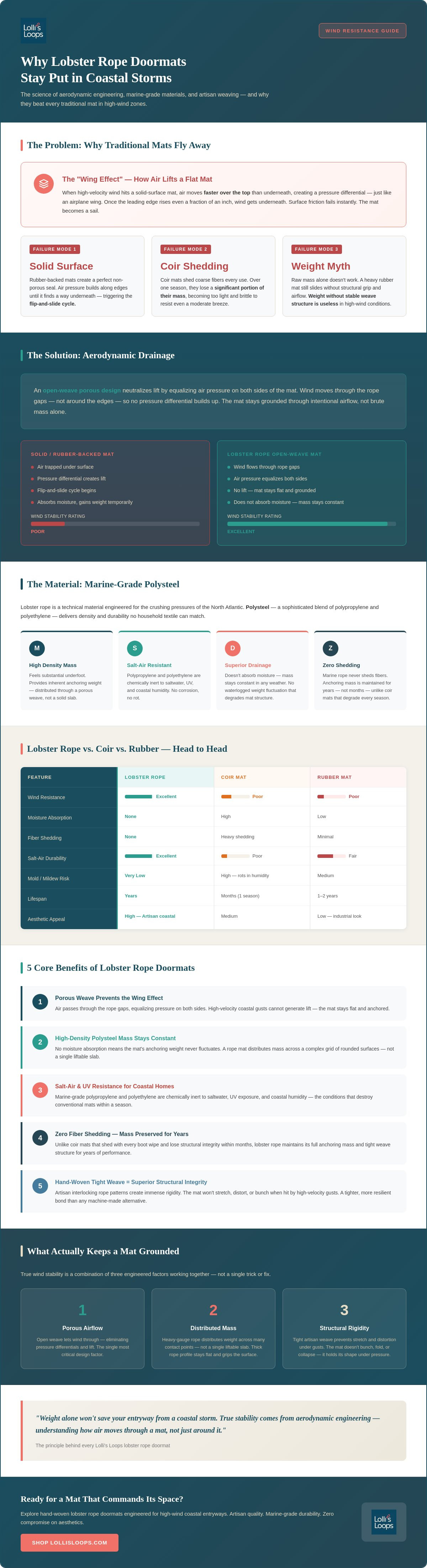
A doormat shouldn't be a projectile. Most homeowners assume weight is the only factor in stability, but this is a common mistake. When a high-velocity gust hits a solid-surface mat, it creates a dangerous pressure differential. This is the 'wing effect.' Air moves faster over the top of the flat surface than underneath it, generating lift. Once that leading edge rises even a fraction of an inch, the wind gets underneath. Surface friction, the force holding the mat to your porch, fails instantly. The mat is no longer a welcoming accessory; it's a sail catching a breeze.
Traditional coir mats offer a temporary illusion of weight. They arrive thick and heavy, but they are designed to fail. Every time you wipe your feet, these mats shed coarse fibers. Over a single season, a coir mat can lose a significant portion of its original mass. It becomes lighter and more brittle. Eventually, it lacks the structural integrity to resist even a moderate breeze. One of the primary benefits of lobster rope doormats is their refusal to shed, maintaining their anchoring mass for years rather than months. They don't just sit on the ground; they command their space.
The Sail Effect of Solid-Surface Backing
Rubber-backed mats are particularly vulnerable in coastal or high-altitude environments. Because rubber is non-porous, it creates a perfect seal against the ground. During a storm, air pressure builds up along the edges until it finds a way underneath. At that point, the mat becomes a sail. It begins the 'flip-and-slide' cycle, tumbling across the yard or bunching up against the door. Many people try to solve this by placing heavy stones or industrial weights on the corners. This ruins the aesthetics of a curated sanctuary. It turns a welcoming threshold into an industrial work site, sacrificing beauty for a temporary fix that rarely works.
Aerodynamic Drainage: The Secret to Staying Grounded
True stability requires aerodynamic drainage. This is the ability for air to pass through the mat structure rather than around it. An open-weave design, like those found in a Signature Stripe Doormat, neutralizes lift by equalizing air pressure. The wind moves through the gaps in the rope. This ensures the mat stays grounded through intentional airflow rather than relying solely on raw mass. The properties of polypropylene and polyethylene used in these ropes ensure they remain heavy and stable without absorbing moisture. By choosing a mat engineered for the elements, you create a permanent entryway solution that survives the most aggressive gales with quiet confidence.
Built for the Gale: The Structural Benefits of Lobster Rope
Rugged. Reliable. Permanent. The structural benefits of lobster rope doormats begin with the fiber itself. Unlike common household textiles, lobster rope is a technical material designed for the crushing pressures of the North Atlantic. It's a heavy duty outdoor mat for wind that relies on polysteel, a sophisticated blend of polypropylene and polyethylene. This material isn't just strong; it's dense. It provides an inherent weight that feels substantial underfoot and remains immovable during a storm. While a traditional mat might rely on a thin layer of decorative fiber, these mats are built from high-density marine line that maintains its physical presence for years.
A proprietary tight-weave construction is the second pillar of this stability. By interlocking the rope in a precise, artisan pattern, the mat gains immense structural integrity. It won't stretch or distort over time. This tension is what prevents the mat from bunching or folding when hit by high-velocity gusts. Many homeowners fall for the 'heavy front door mat' myth, believing that raw mass is the only thing that matters. However, weight without a stable structure is useless. A heavy rubber mat can still slide if it lacks the grip and airflow of a hand-woven rope mat. The weave allows the wind to dissipate through the fibers, effectively pinning the mat to the ground rather than lifting it.
Weight Without Bulk: The Marine-Grade Advantage
Weight behaves differently when it's distributed through a porous weave. A ten-pound rubber mat is a solid, unyielding slab that invites air to trap underneath it. A ten-pound lobster rope mat is a complex grid of rounded surfaces. The diameter of the rope creates a thick profile that stays flat against the porch. It provides significant mass without the industrial, clunky appearance of weighted rubber. This balance ensures your entryway remains a curated sanctuary. It's a sophisticated solution that offers high-performance anchoring while maintaining the warmth of coastal artistry.
Engineered for Ocean-Force Elements
Lobster rope is born in the surf. It's engineered to withstand gales that would shred natural coir or synthetic turf in a single season. With a breaking strength of 1,700 lbs, the rope's durability is unmatched in a residential setting. This strength is bolstered by intense UV resistance. Some ropes utilize up to six times the industry standard for UV protection, ensuring the fibers don't become brittle or lose their density under the sun. This resilience is why drainage outperforms absorbency when the weather turns. If you're looking for a specific color or size to anchor your threshold, feel free to reach out to our team for personalized advice on your coastal entryway.
Lobster Rope vs. Coir: A Comparison for High-Wind Zones
Choosing a doormat for a coastal home is a study in material science. For decades, coir was the default choice. It's affordable; it looks natural. But in high-wind zones, coir is a liability. While rubber mats act like sails and synthetic turf feels flimsy, coir suffers from a slow, structural surrender. One of the primary benefits of lobster rope doormats is their permanence. They don't just resist the wind; they resist the very environment that causes traditional mats to fail. For a deeper dive into these materials, explore our Lobster Rope vs. Coir Doormat: The Definitive Comparison.
Salt air is the enemy of natural fiber. It penetrates coir bristles, making them brittle and prone to snapping. This isn't just an aesthetic issue. As the mat sheds, it loses the density required to stay anchored. A lobster rope mat, crafted from marine-grade polysteel, remains indifferent to salt and spray. It maintains its original weight and tensile strength, even in the face of 2026 weather extremes. It's an investment in a threshold that remains as stable on day one thousand as it was on day one.
Why Coir Fails the Wind Test
Shedding is the silent killer of doormat stability. Industry observations show a standard coir mat can lose up to 30% of its total mass over a single season. This reduction in density makes the mat increasingly susceptible to the "wing effect" discussed earlier. Moisture absorption creates another layer of failure. Coir traps water within its core, leading to uneven weight distribution and a soggy, mold-prone base. This dampness attracts wind-blown debris like leaves and twigs. These items nest within the bristles, creating a jagged surface area that gives the wind more edges to grab and lift.
Maintaining Mass with Synthetic Marine Fibers
Stability is a constant with the Lolli’s Loops collections. These mats are hand-woven from synthetic marine fibers that are engineered for the open ocean. They don't absorb water. They don't shed. This ensures the weight of your mat remains consistent throughout its life. Because the weave is open, wind-blown sand passes through the mat rather than becoming trapped within the fibers. When the seasons change, a simple power-wash restores the mat to its original luster. It's a low-maintenance, high-performance anchor for the modern coastal home. You get the ruggedness of the Atlantic with the refined artistry of a master craftsman.
Strategic Sizing and Weave Patterns for Maximum Anchoring
Aesthetics often dictate size. However, in high-wind regions, dimensions are a tactical choice. One of the less discussed benefits of lobster rope doormats is how their footprint interacts with the porch surface. A larger mat provides greater leverage. By increasing the total area in contact with the ground, you increase the amount of force required for a gust to initiate a lift. While a standard 18" x 30" mat is common, choosing a 36-inch option to cover at least 80% of your door's width ensures a more secure threshold. This isn't just about coverage; it's about anchoring your home against the elements with intentional design.
Consistency is paramount. A flat, consistent weave across the entire surface prevents pockets where air might collect. If a mat is uneven or has raised edges, it provides a catch-point for the wind. The way you position the mat also matters. If you live in an area with a strong prevailing wind, aligning the long edge of the mat perpendicular to the gust can reduce the surface area vulnerable to lifting. This strategic placement, combined with the inherent weight of marine-grade rope, creates a threshold that stays put through the most aggressive gales.
The Leverage of Large-Format Mats
Surface area is your ally. A double-door mat or a Custom Size Doormat offers significantly more wind resistance than a standard small mat. The physics are simple: more ground contact equals more friction. In high-wind zones, a snug, anchored fit is essential. When a mat fits perfectly within an entryway alcove, the surrounding walls act as a natural windbreak, further protecting the unit from being displaced. This tailored approach transforms a simple accessory into a permanent architectural feature of your coastal sanctuary.
Texture as Traction
Friction is the silent partner of weight. The tactile, rugged nature of lobster rope creates natural traction against porch surfaces like wood, stone, or composite decking. This prevents the mat from 'scooting' or shifting during heavy foot traffic or moderate gusts. Different patterns, such as the Signature Stripe Doormat or a Wave Pattern weave, affect air turbulence differently. These patterns break up the airflow across the top of the mat, reducing the laminar flow that contributes to the 'wing effect.' The proprietary interlocking weave ensures that every strand works in unison to maintain a firm grip on the floor beneath it. If you have questions about which pattern suits your specific environment, you can contact us for expert sizing advice.
Handcrafted Resilience: Why Lolli’s Loops Outlasts the Storm
Machines prioritize speed; we prioritize tension. Mass-produced mats often rely on loose, automated weaving that prioritizes a low price point over long-term performance. At Lolli’s Loops, our process is a deliberate exercise in manual artistry. By hand-threading each pass of the marine-grade line, our artisans ensure the weave is tight enough to resist the persistent tug of a coastal gale. This manual tension creates a heavier, more substantial bond that machine-made options simply cannot replicate. One of the enduring benefits of lobster rope doormats is this refusal to compromise on structural integrity. It is the difference between a temporary accessory and a legacy piece for your threshold.
The materials we select are chosen for their ability to withstand the shifting climate of 2026. We use reinforced marine rope that is specifically engineered to endure high-velocity winds and intense UV exposure without losing its density. The Captains Rope Doormat in Black and Tan exemplifies this commitment to durability. It combines a sophisticated, neutral aesthetic with the ruggedness required for year-round outdoor use. This isn't just a mat; it's a testament to the idea that a home should be a curated sanctuary, anchored by quality that survives the storm season with quiet confidence.
Artistry Meets Utility
Our proprietary tight-weave ensures that the mat maintains its shape under pressure. When a storm hits, a loosely woven mat might stretch or distort, creating gaps that catch the wind. Our artisan-made approach prevents this failure. Because we use more rope per square inch than standard competitors, the finished product is naturally heavier and more stable. This density provides the weight needed to stay grounded without the need for unsightly industrial anchors. Just as StripeGuys Warhouse Line Striping provides the durable precision required for industrial floor safety, these mats offer a professional-grade solution for the home. You gain an elegant, low-maintenance entrance that doesn't require constant attention or replacement after every heavy rainfall. It allows you to focus on the hospitality of your home rather than the maintenance of your porch.
Anchoring Your Sanctuary
A stable entrance is the first step in creating a welcoming home. We invite you to explore our Signature Stripe options to find a pattern that complements your coastal style while providing the anchoring mass your environment demands. There is a profound peace of mind that comes with knowing your doormat will stay exactly where you put it, regardless of the weather report. We believe in building things that last. If you have a unique entryway or specific wind concerns, you can inquire about a custom wind-resistant mat at Lolli’s Loops. Our team is ready to help you anchor your sanctuary with a solution that is as beautiful as it is resilient.
Anchor Your Threshold Against the Elements
Your entryway is more than a simple transition point. It's the first handshake of your home. By choosing materials originally designed for the crushing pressures of the open ocean, you ensure that this greeting remains steady and sophisticated regardless of the forecast. We've explored how aerodynamic drainage and strategic sizing neutralize the "wing effect" that sends traditional mats flying across the lawn. These technical advantages highlight the true benefits of lobster rope doormats for those living in high-wind zones. It's about investing in a threshold that commands its space with quiet, rugged confidence.
Every piece we offer is handcrafted with a proprietary tight-weave construction that maximizes anchoring mass. We use reinforced marine-grade lobster rope that is naturally mold, mildew, and fade-resistant; this ensures your sanctuary remains pristine and grounded through every coastal storm season. You don't have to compromise between heavy-duty performance and a refined coastal aesthetic. If you're ready to secure your porch with a permanent, artisan solution, Design Your Wind-Resistant Entryway at Lolli’s Loops. We look forward to helping you anchor your home with a legacy of craftsmanship.
Frequently Asked Questions
Do rope doormats really stay down in high winds?
Yes, they stay down because the open-weave design allows air to flow through the structure. This prevents the "wing effect" that lifts solid rubber or coir mats. By equalizing air pressure above and below the mat, the unit remains anchored to your threshold even during aggressive coastal gusts. These structural advantages are among the key benefits of lobster rope doormats for gale-prone regions.
How heavy is a standard wind-resistant rope mat?
A standard 18" x 30" mat usually weighs between 7 and 10 pounds. This significant mass is a result of the high-density polysteel used in our artisan weaving. It provides enough weight to resist shifting underfoot while remaining manageable for seasonal cleaning. Larger custom sizes can weigh considerably more, offering even greater stability against the elements during a severe storm.
Can wind-resistant mats be used on slippery surfaces like tile?
These mats perform exceptionally well on most surfaces, but very smooth tile may require a thin non-slip pad. The rugged, tactile nature of the rope creates excellent natural friction on wood, concrete, and composite decking. For polished stone or slick tile, a simple grip layer underneath ensures your mat stays exactly where you placed it during a heavy storm or high-traffic event.
What is the best doormat material for a house on the coast?
Marine-grade polysteel is the superior material for any coastal residence. It's engineered to resist rot, mildew, and salt air degradation. One of the primary benefits of lobster rope doormats is their longevity in high-moisture environments. Natural fibers like coir fail quickly in the salt spray, while synthetic marine rope maintains its color and strength for years of reliable service.
Will a rope doormat shed or lose weight over time?
Our mats are designed to be non-shedding and will maintain their original mass indefinitely. Traditional coir options often lose up to 30% of their weight as fibers break off and blow away. Because lobster rope is a continuous synthetic filament, it won't become lighter or more brittle over time. Your mat stays as heavy and effective as the day it arrived at your door.
How do I clean a doormat that has been through a storm?
Cleaning is effortless even after a severe weather event. You can simply shake the mat to dislodge sand or spray it down with a garden hose. For a deeper clean, a power washer on a gentle setting will restore the vibrant colors. The non-absorbent fibers ensure that the mat dries quickly and doesn't harbor the damp odors common with organic materials like coir.
Is a custom-sized doormat better for wind resistance?
A custom-sized mat offers superior wind resistance by maximizing ground contact. When a mat fits perfectly within your entryway's dimensions, it leaves no gaps for air to catch the edges. This increased surface area creates more friction, providing the necessary leverage to stay anchored. It transforms a standard accessory into a tailored, high-performance architectural feature for your sanctuary that resists the strongest gales.
Can I leave my lobster rope mat out during a hurricane?
We recommend bringing the mat indoors when a hurricane warning is issued. While the marine-grade rope is virtually indestructible, extreme winds can lift almost any unsecured item. Safety is the priority during such events. Once the storm passes, you can immediately return the mat to your porch, knowing it's ready to handle the rain and debris left behind without any loss of quality. For homeowners who find themselves with more substantial debris that requires professional removal, click here to learn about roll-off dumpster rentals from LA Dumpster Bins.