The Definitive Comparison of Marine Rope and Coir Doormats
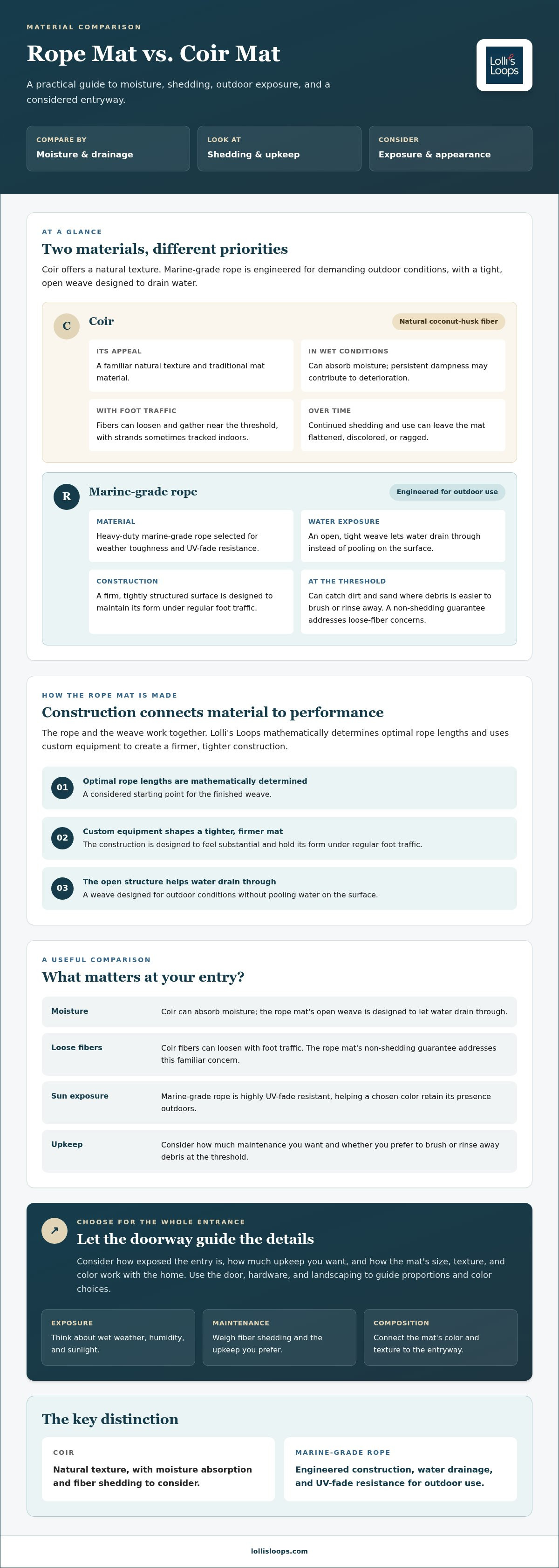
In the rope mat vs coir mat comparison, the difference often becomes clear after weeks of wet weather, wind, and loose fibers tracked indoors. Coir offers a natural texture, but it can absorb moisture and shed. Marine-grade rope is designed for demanding outdoor conditions, with a tight weave that lets water drain through.
It’s reasonable to ask whether a rope mat is worth considering when coir is so common. The answer depends on your entryway: how exposed it is, how much upkeep you want, and whether you want a mat that complements the home’s design as well as welcomes guests.
This comparison looks at how each material performs in daily use, from fiber shedding and water exposure to color retention and stability outdoors. You’ll see how Lolli's Loops uses tightly engineered, marine-grade rope for a firm, non-shedding weave designed to drain water and resist UV fading. We’ll also consider coir’s natural appeal, so you can weigh its character against the practical demands of your entrance.
Key Takeaways
- Compare rope mat vs coir mat by how each handles moisture, shedding, and outdoor exposure, not just by first impression.
- Consider how a doormat’s size, texture, and color contribute to your entryway’s overall appearance.
- Marine-grade rope, UV-fade resistance, and an open weave can support color retention and drainage outdoors.
- Use your doorway, hardware, and landscaping to guide mat proportions and color choices.
- Learn how mathematically determined weave lengths and custom equipment contribute to a firmer, tighter rope mat.
The Entryway Investment: Why Traditional Coir Fails Architectural Standards
A considered entrance is a composition of door, threshold, lighting, and landscaping, with the mat completing the arrival. Though modest in scale, a doormat frames the doorway. If it looks damp, frayed, or covered in loose fibers, it can detract from an otherwise well-kept exterior.
Coir has a long history in mats and rope. Made from coconut husk fiber, it offers a natural texture; the Coir overview describes its origins and traditional uses. But natural fiber still needs suitable conditions. Coir can absorb moisture, and persistent dampness may contribute to deterioration. In a humid or exposed location, a mat that stays wet may lose its shape and fresh appearance sooner than expected.
The Lifecycle of a Traditional Coir Mat
Foot traffic can loosen fibers from a coir mat’s surface. Strands gather around the threshold and may be carried indoors, adding to cleanup and bringing grit onto the floor. With continued shedding and use, the mat can look flattened, discolored, or ragged. The change is gradual, but noticeable: a natural finish can start to look worn before the rest of the entrance needs attention.
Replacing a tired mat may seem like a small seasonal task. Repeating that cycle, however, means accepting recurring upkeep and an entryway that never quite feels settled. The rope mat vs coir mat decision is about more than texture. It’s also about how the mat fits your expectations for maintenance and appearance.
Elevating the Entrance Experience
Think of the doormat as the home’s first chapter. Its size should feel intentional beside the door, and its texture and color should connect with the siding, hardware, and landscape. A well-chosen mat doesn’t compete with those elements. It gives the entrance a defined point of arrival.
An architectural anchor also gives the threshold a more considered feel. Instead of treating it as disposable decor, choose a mat for its material, construction, and ability to complement the home over time. Lolli's Loops uses heavy-duty marine-grade rope and mathematically determined weave lengths to create a firmer, tighter mat designed for outdoor conditions. It’s a functional surface and a deliberate part of the entryway’s design.
That distinction matters when curb appeal is a priority. A well-composed entrance deserves a mat that looks considered, feels substantial underfoot, and works with the care given to the doorway and surrounding landscaping.
Engineering Excellence: The Material Science of Marine Rope vs. Coconut Fiber
Durability depends on more than a material name. It also depends on how the material responds to sunlight and moisture, and how the finished weave handles repeated foot traffic. In the rope mat vs coir mat comparison, coir’s natural origin and marine rope’s engineered construction serve different priorities. Lolli's Loops selects marine-grade rope for weather toughness and UV-fade resistance, while coir can absorb moisture and may deteriorate if it stays damp.
Rope is not one uniform material. Its fibers and construction affect how it performs under tension. Britannica’s overview of rope materials and construction offers context on how rope materials and construction differ. Lolli's Loops uses heavy-duty marine-grade lobster rope. The practical comparison is between coir’s natural texture and the weather resistance and engineered weave of this rope mat.
UV-Fade Resistance and Color Longevity
Prolonged sun exposure can change the appearance of outdoor materials. Marine-grade rope is highly UV-fade resistant, helping a chosen color palette retain its presence outdoors. Coir’s color and texture can also change with exposure. When choosing a mat, consider how its color will look beside your siding, door hardware, and landscaping over time. The goal is not only to match the entrance today, but to choose a color that continues to work with it.
Structural Integrity and Weave Density
A strong fiber alone doesn’t make a dependable mat. Weave design matters, too. Lolli's Loops mathematically determines optimal rope lengths and uses custom equipment to create a firmer, tighter construction. The tight weave is designed to maintain its form under regular foot traffic, while its open structure lets water drain through instead of pooling on the surface. The rope and construction work together.
For homeowners, the difference is practical. A firm, stable surface feels substantial underfoot, and a well-structured weave can catch dirt and sand at the threshold, where debris is easier to brush or rinse away. Lolli's Loops’ Non-Shedding Guarantee also addresses a familiar concern with loose natural fibers.
Judge material and construction together. UV-fade resistance supports color retention, drainage helps manage wet conditions, and a firm weave supports everyday use. To explore these designs, browse the best-selling rope doormats and consider which color and pattern will suit your entrance.
Performance Under Pressure: Drainage, Wind Stability, and High-Traffic Durability
An entry mat faces more than passing shoes. Rain, wind, salt-laden air, and daily foot traffic all test its shape and appearance. In the rope mat vs coir mat comparison, performance depends on material and construction working together, not appearance alone.
Conquering the Coastal Elements
Heavy-duty marine-grade rope is made for demanding outdoor conditions. A substantial rope mat may be less prone to shifting than a lightweight mat, but no mat can be assumed to stay put in every storm or on every surface. Consider the mat’s dimensions and placement in relation to your threshold, especially if the entrance is exposed to strong winds.
Water management matters just as much. An open rope weave lets water pass through instead of leaving it pooled across the surface. This helps water drain and makes the mat suitable for uncovered outdoor use. Coir has traditional marine uses, but it can absorb moisture, so extended dampness may contribute to deterioration. Placement and airflow still matter for any outdoor mat.
Marine-grade rope is selected for weather toughness, including use in exposed outdoor settings. It’s a considered choice where salt air and changing conditions are part of everyday life. Still, match the material and construction to the conditions at your doorway rather than assuming any mat is immune to every environmental stress.
Everyday Durability and Care
At a busy entrance, repeated steps can press a mat out of shape or wear down its surface. Lolli's Loops uses mathematically determined weave lengths and custom equipment to make a firmer, tighter construction intended for lasting performance. If your doorway sees frequent visitors, consider how a mat’s structure and drainage will support daily use.
Winter brings another consideration: wet conditions followed by freezing temperatures. Choose a mat suited to your climate and follow the maker’s care guidance rather than assuming it will withstand every freeze and thaw cycle. For cleaning, check the product’s instructions before using a hose or pressure washer, since care guidance can vary by product.
For simple upkeep, remove loose debris regularly and let the mat dry thoroughly after it gets wet. Lolli’s Loops shares additional guidance on cleaning a rope doormat, including ways to care for its appearance through daily use.
Selecting the Ideal Architectural Anchor for Your Entryway
The right mat should feel proportionate to the entrance, not like an afterthought. For a wide doorway or double doors, assess the full threshold and surrounding space before choosing dimensions. An undersized mat can interrupt the composition; one that extends too far may crowd steps, planters, or the door’s swing. Measure the usable area and consider how the entrance looks from the approach.
This is where the rope mat vs coir mat decision becomes part of a broader design choice. Material, dimensions, color, and pattern work together to shape the first impression.
Color, Pattern, and Curb Appeal
Begin with the fixed elements: siding, door finish, hardware, and nearby landscaping. A considered color combination can echo those tones or introduce deliberate contrast. Stripes create a classic rhythm; wave-inspired patterns add movement, while gradient transitions bring visual depth to the doorstep. Lolli’s Loops offers designs including the Signature Stripe Doormat among its best-selling rope doormats. Choose a pattern that complements rather than competes with the home’s architecture.
Scale and Bespoke Fit
Standard proportions don’t suit every threshold. If your entrance has unusual dimensions, a made-to-order Custom Size Doormat can provide a more tailored fit. Lolli’s Loops production lead time is 4 to 6 weeks. Measure carefully and plan ahead if you want a custom size for a particular season or project.
Texture and visual weight matter, too. A substantial rope weave can ground the entrance, while color and pattern connect it to the home’s surrounding materials. Coordinating rope accents, such as a hand-woven rope basket, can extend the palette to a porch or mudroom without making every detail match. Aim for harmony, not uniformity.
For a considered selection, first note the doorway’s width and available floor space. Then identify the colors you want to echo or complement, and choose a stripe or wave-inspired design that suits the home. This gives you a mat that supports curb appeal and welcomes guests with intention.
The Lolli's Loops Distinction: Mathematically Engineered Bespoke Artistry
In the rope mat vs coir mat decision, construction deserves as much attention as material. Lolli's Loops approaches rope weaving as an engineering process: it mathematically determines weave lengths, then uses custom equipment to create a firmer, tighter structure. Each handcrafted marine-grade rope mat is designed to bring considered form and dependable performance to the threshold.
That precision matters because rope length and tension affect how the weave sits together. Lolli's Loops considers the relationship between the rope and the weave, making each mat with structural integrity in mind rather than relying on pattern alone.
The Proprietary Tight-Weave Process
Custom equipment helps produce the firmer weave that defines the brand’s approach. It supports a close construction, while the selected rope brings weather-tough, UV-fade-resistant qualities suited to outdoor entryways. These design choices are intended to help a mat maintain its composed appearance through regular use. Placement, exposure, and care also influence how an outdoor mat looks over time.
Explore the Captains Rope Doormat in Blue and Sand to see how a structured rope weave pairs practical material choices with a carefully considered color combination.
Craftsmanship for the Coastal Home
Handcrafted does not mean improvised. Here, careful work and measured construction go together: the process uses calculated weave lengths and specialized equipment, with marine-grade rope selected for demanding outdoor conditions. The result is a mat designed to combine durability with a considered finish.
For a homeowner, the value lies in how those choices come together at the entrance. A tightly constructed rope mat can serve as an architectural anchor, bringing color, texture, and intention to the transition between outdoors and home. It’s not simply a floor covering. It’s a functional design element chosen to complement the architecture and create a welcoming first impression.
Choose an Entryway Built for Lasting Impression
The choice between a rope mat vs coir mat comes down to your entryway’s conditions and priorities. Coir offers natural texture, while marine-grade rope brings weather-tough performance, UV-fade resistance, and drainage suited to exposed thresholds. The right mat should support everyday use and the curb appeal you’ve worked to create.
Lolli’s Loops combines a mathematically engineered tight-weave with heavy-duty marine rope to create a firm, carefully constructed entryway mat. Its Non-Shedding Guarantee addresses a common frustration with loose fibers, while its colors and patterns add a considered finish to the entrance.
To choose a mat that reflects your home’s character, assess the proportions, color palette, and exposure of your entrance, then explore Lolli’s Loops’ made-to-order options. Ask about a bespoke architectural anchor for your entryway and take the next step toward a more welcoming threshold.
Frequently Asked Questions
Why is marine-grade rope superior to coir for coastal homes?
Marine-grade rope is designed for demanding outdoor conditions, making it a considered choice for exposed entryways. Lolli’s Loops uses heavy-duty rope that’s weather-tough and UV-fade resistant, with an open weave that lets water drain through. Coir has natural appeal and traditional uses, but it can absorb moisture and may deteriorate if it remains damp. In a rope mat vs coir mat comparison, consider your home’s exposure and the upkeep each material requires.
Do rope doormats shed like traditional coconut fiber mats?
Lolli’s Loops rope mats are covered by a Non-Shedding Guarantee, addressing the loose-fiber trail often associated with traditional coconut fiber mats. Their marine-grade rope and tightly engineered construction are designed to trap dirt without leaving shedding fibers around the threshold. Regular cleaning is still useful for removing grit and debris carried in on shoes.
How do I choose the right size doormat for my front entrance?
Measure the usable width of the threshold and the depth available, allowing the door to open comfortably. For double doors or a wide entrance, assess the full doorway rather than sizing the mat to one door panel. Consider nearby steps, planters, and architectural details so the mat feels balanced without crowding the approach. Lolli’s Loops offers a Custom Size Doormat for entryways that need a tailored fit.
Are lobster rope mats truly weatherproof in snow and salt?
Lolli’s Loops mats are made with marine-grade rope designed for harsh outdoor conditions, and their open weave allows water to drain through. The company describes its products as all-weather and suitable for uncovered use. Snow, salt residue, exposure, and care can still affect how an outdoor mat looks over time. Follow the product’s care guidance and clear away accumulated debris when needed.
Why is there a lead time for Lolli’s Loops doormats?
Lolli’s Loops mats are made to order rather than taken from stocked inventory. Production has a 4 to 6 week lead time, reflecting the measured process behind each mat, including mathematically determined weave lengths and custom equipment for a firmer, tighter construction. If you’re planning an entryway refresh for a particular occasion or season, factor that production window into your timing.
Can I leave my rope mat uncovered in direct sunlight year-round?
Lolli’s Loops mats are designed for uncovered, year-round use, and their marine-grade rope is highly UV-fade resistant. That resistance helps the colors retain their vibrancy, though sun intensity, weather, and placement can affect appearance over time. For cleaning, follow the care guidance provided for the mat rather than assuming every method is suitable.
How much weight does a marine rope mat typically have to prevent blowing away?
There isn’t a confirmed typical weight or minimum weight specification for Lolli’s Loops mats, so don’t assume a specific figure. Wind stability depends on the mat’s dimensions, construction, surface, and how exposed the entrance is. The brand uses heavy-duty marine-grade rope, but strong gusts can affect outdoor furnishings. For a particularly exposed doorway, consider the mat’s listed details and your threshold conditions.
Is the weave of a rope mat comfortable for bare feet?
Rope mats have a distinct, structured texture rather than the plush feel of a soft indoor rug. Lolli’s Loops uses a firmer, tightly engineered weave intended for entryway performance, so barefoot comfort depends on your preference and sensitivity to texture. If you expect to walk across the mat without shoes, consider how you respond to woven surfaces and review the product details before choosing a style.