

Marine Rope Welcome Mats: The Ultimate Reference Guide to Coastal Durability
Most welcome mats are designed to fail. They arrive looking fresh but quickly succumb to the first season of salt air and heavy rain. A premium solid color rope doormat isn't just a piece of decor; it's a piece of maritime equipment repurposed for the home. You've likely grown tired of mats that rot, mold, or simply blow away when the wind picks up. It's frustrating to invest in a coastal aesthetic only to watch it fade under the relentless sun.
We understand that your home is a sanctuary that deserves materials built for permanence. In this guide, you'll discover how the technical engineering of marine-grade rope and the legacy of artisan weaving create an entryway solution that stays put for years. We'll explore the functional superiority of synthetic fibers, the rigorous ISO standards for fiber ropes, and why a hand-woven construction is the ultimate anchor for your threshold. From the UV resistance of polyester to the strength of a tight-weave braid, we'll show you how to choose a mat that balances rugged durability with refined artistry.
Key Takeaways
- Explore the transition of high-tensile marine cordage from rugged lobster boats to the refined thresholds of modern coastal homes.
- Learn why a solid color rope doormat crafted from UV-stabilized fibers maintains its vibrant hue and structural integrity against the harshest solar exposure.
- Analyze how proprietary tight-weave construction maximizes dirt-trapping capabilities while allowing for effortless debris release under a simple garden hose.
- Master the maintenance protocols that leverage hydrophobic properties to prevent mold and core rot, ensuring your mat remains a permanent all-weather anchor.
- Understand the functional superiority of hand-woven techniques that offer a level of durability and bespoke sizing that machine-pressed products cannot match.
What is a Marine Rope Welcome Mat? Defining the Coastal Entryway Icon
A marine rope welcome mat is a masterclass in functional endurance. It is an intentional intersection of industrial-grade utility and coastal elegance. Originally, these materials were forged for the unforgiving conditions of the North Atlantic, where gear failure wasn't an option. Today, they serve as a primary defense for your entryway. Unlike standard coir or mass-produced store mats, these pieces utilize high-tensile, weather-resistant cordage designed to withstand constant submersion and abrasive salt spray. Transforming this material into a solid color rope doormat creates a threshold that is practically indestructible. It's a heavy-duty solution that anchors your home, providing a stable, textured surface that refuses to rot, mold, or harbor odors. The weight alone makes it an ideal application; it stays exactly where you place it, even in the face of coastal gales.
The Evolution of Lobster Rope
The history of these mats is written in salt and hemp. Early maritime history relied on natural fibers like manila or sisal. These fibers were charming but prone to rapid decay in wet environments, often becoming brittle and useless within a single season. The shift toward reinforced synthetics changed everything for the fishing industry. By 2026, the market has fully embraced high-performance polymers that offer superior longevity and colorfastness. What began as functional, rugged gear on the deck of a lobster boat has transitioned into a high-end artisan home good. This evolution ensures that the same resilience required to haul heavy traps from the seabed now protects your sanctuary. It's a legacy of survival repurposed for hospitality.
Terminology: Marine Rope vs. Nautical Cordage
Understanding the "marine-grade" designation is essential for discerning true quality. It refers to a specific standard of manufacturing where fibers are UV-stabilized and engineered to reject water entirely. Most high-quality mats utilize polypropylene, polyethylene, or specialized nylon blends. These materials are chosen because they don't absorb moisture, preventing the heavy, soggy core that leads to rot in traditional mats. Rope construction and materials vary significantly across industries, but for a residential entryway, the density and diameter are paramount. A thicker rope provides a more substantial, supportive feel underfoot, while the tight-weave construction ensures the mat remains a stable, permanent fixture. Choosing a solid color rope doormat allows these technical details to take center stage, highlighting the intricate texture and the honest, manual labor involved in the weave. It's a quiet statement of quality that speaks louder than ornate, flimsy alternatives.
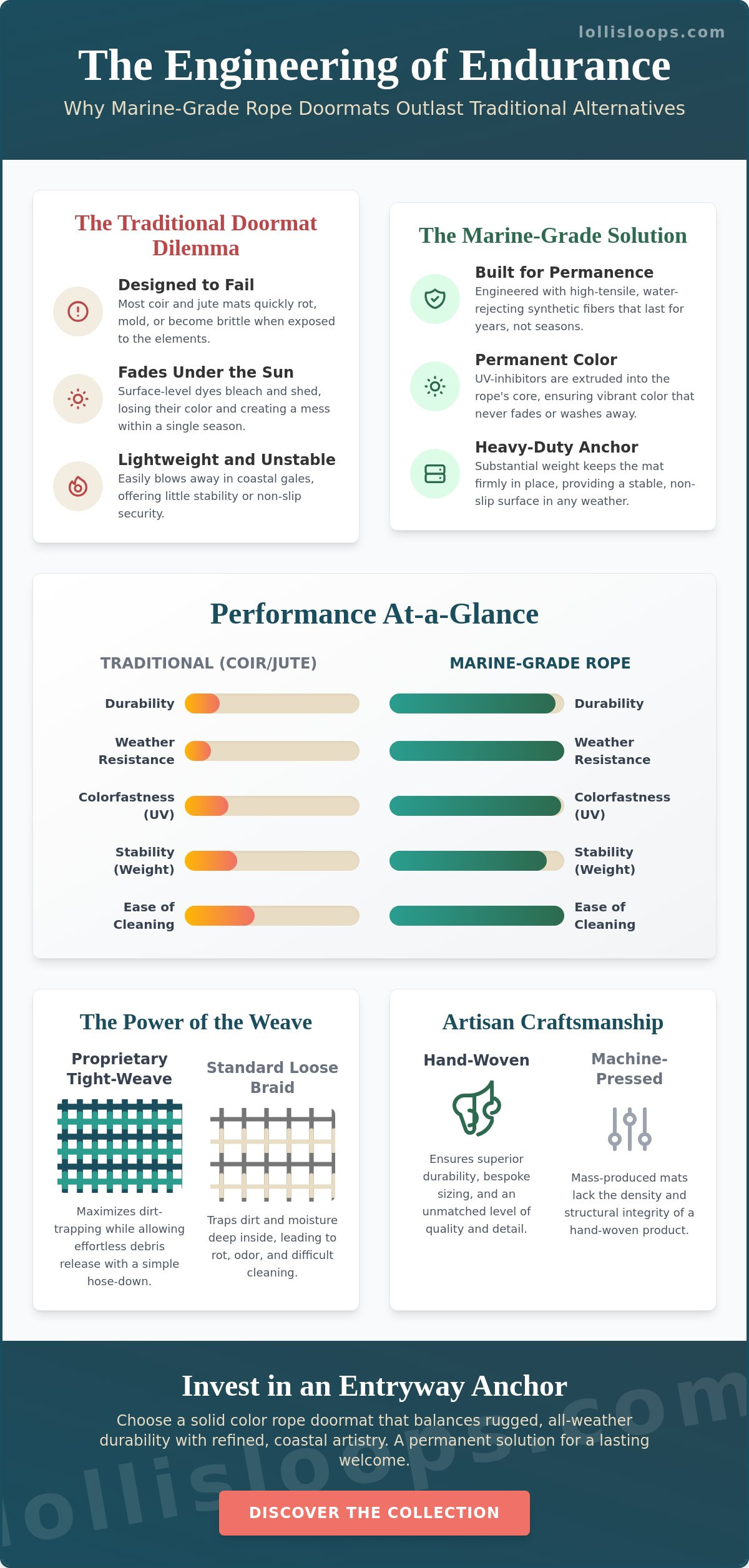
The Engineering of Endurance: Why Marine-Grade Rope Outlasts Traditional Materials
Endurance isn't an accident. It's the result of deliberate chemical engineering designed to combat the elements. A solid color rope doormat relies on advanced synthetic polymers that outperform natural materials in every measurable category. These mats don't just sit at your door; they perform a technical task. By utilizing materials that meet international standards like ISO 9554:2019, these mats offer a level of stability that standard store-bought options can't match. They are built to be heavy. They are built to be permanent. This weight is a critical functional asset. It ensures the mat stays anchored during coastal gales while providing a firm, non-slip surface for every guest who crosses your threshold.
UV Resistance and Color Permanence
Colors stay vibrant because UV-inhibitors are integrated during the fiber extrusion process. This isn't a surface treatment that wears off or washes away. It's part of the rope's DNA. Choosing a solid color rope doormat means opting for a product that won't leave messy fibers behind or lose its punchy hue after a single summer. While dyed coir or jute will fade, bleach, and eventually shed under direct sunlight, marine-grade rope maintains its structural integrity. It's designed to withstand 2026 solar levels without becoming brittle. The history of nautical knots reminds us that maritime gear was always a life-saving investment, requiring fibers that wouldn't snap after a summer at sea. Modern engineering has simply refined this necessity into a beautiful home accessory that looks as new in year five as it did on day one.
The Problem with Moisture: Why Coir Fails
Natural fibers like coir are essentially plant matter. In rainy or humid climates, they act as sponges, trapping moisture against your floor and creating a breeding ground for bacteria. This leads to core rot and a lingering, musty scent that's nearly impossible to remove. Marine rope is different. Its hydrophobic properties ensure that water passes through the weave rather than soaking into the fiber itself. Because marine rope is made from non-porous synthetic polymers, it's biologically inert and provides no organic material for mold or mildew to consume. This creates a drainage-friendly threshold that stays dry, clean, and fresh regardless of the season.
If you're tired of replacing flimsy mats every spring, it's time to invest in a solution that respects both form and function. For an entryway anchor that balances rugged durability with a sophisticated aesthetic, consider the lasting beauty of a Solid Color Doormat.
Tight-Weave vs. Standard Braids: Analyzing Structural Integrity Underfoot
Structure dictates destiny. When you step onto a solid color rope doormat, the physical resistance you feel is the result of deliberate tension and weave density. Most mass-produced mats utilize a standard braid that prioritizes speed over stability. These loose constructions often feel spongy and lose their shape within months. A proprietary tight-weave construction is different. It relies on the mechanical principles of high-tensile cordage to create a rigid, self-supporting grid. This isn't just about aesthetic neatness; it's about engineering a surface that refuses to warp, stretch, or thin out under heavy foot traffic. The human hand provides a level of tension that industrial machines simply cannot replicate, ensuring every loop is anchored with precision.
The Mechanics of Dirt Trapping
A high-performance mat must do more than look the part. It has to act as a functional filter for your home. The raised profile of a tight-weave solid color rope doormat creates a series of aggressive "scrapers" that catch debris from every angle of a shoe sole. Unlike rubber-backed mats that trap dirt and moisture on the surface, creating a messy slurry, marine rope utilizes a "fall-through" effect. Sand, salt, and dry mud pass through the gaps in the weave, settling on the ground beneath the mat. This keeps the walking surface clean and prevents the abrasive "sandpaper effect" that ruins indoor flooring. Because the fibers are non-porous, they don't hold onto the grime; a quick lift and sweep is all it takes to maintain a pristine entry.
Structural Longevity and Shape Retention
Longevity is found in the details of the edging. Standard mats often fray at the perimeter because they lack reinforced finishing. In a handcrafted mat, the terminal ends of the rope are integrated back into the body of the weave, creating a seamless, heavy-duty border. This prevents the tripping hazards associated with loose, unraveling fibers. For those seeking a deeper look at how these elements fit into a broader home aesthetic, explore The Modern Rope Doormat: A Guide to Minimalist Entryway Design. A well-constructed mat remains flat and heavy, resisting the curling corners that plague lighter, synthetic turf products. It is a permanent fixture that respects the architecture of your threshold, providing a stable, textured transition from the wild outdoors to your curated interior sanctuary.
Maintenance and Longevity: A Reference for All-Weather Performance
Permanence requires minimal intervention. While lesser mats disintegrate under the weight of a single winter, a solid color rope doormat is engineered to endure for a decade or more. This isn't a disposable accessory. It's a 10-year investment in your home's threshold. Daily care is refreshingly tactile. A simple shake removes loose grit. A quick spray with a garden hose clears away dust. Because the fibers are non-absorbent, the mat dries rapidly in the open air, returning to its original, vibrant state without the risk of mildew or lingering dampness.
Deep cleaning is only necessary when the seasons leave their mark. Heavy mud or thick salt accumulation from winter roads can settle deep within the weave. In these instances, a more methodical approach preserves the artisan craftsmanship. You don't need specialized tools. You only need a bit of pressure and the right technique to ensure your entry remains a curated sanctuary. These mats are built to face the extreme solar levels and icy conditions of 2026 with quiet confidence.
Step-by-Step Power Washing Guide
Power washing is the most effective way to rejuvenate a heavily soiled mat. Use a wide-fan nozzle and maintain a safe distance to prevent fraying the synthetic fibers. A setting between 1,200 and 1,500 PSI is typically sufficient to dislodge stubborn grime without stressing the weave. If soap is required, choose a mild detergent. Avoid harsh bleaches or industrial chemicals that could strip the fiber's natural luster. Once cleaned, lean the mat vertically against a wall or railing. This orientation utilizes gravity to pull moisture through the drainage-friendly weave, ensuring a thorough dry from the core to the surface.
Managing Environmental Stressors
Coastal living brings unique challenges. Fine beach sand can migrate into the tight-weave matrix, but the fall-through design makes removal effortless. Simply lift the mat and sweep the debris from the ground beneath. Salt crystallization in snowy or maritime zones is equally manageable with a fresh-water rinse. Because the synthetic polymers are naturally resistant to moisture and UV degradation, these mats require no chemical sealants to maintain their structural integrity. They remain heavy, stable, and vibrant regardless of the environmental pressure.
Invest in an entry solution that values your time as much as your aesthetic. To find a permanent anchor for your home, explore our collection of Solid Color Doormats today.
Artisan Craftsmanship: How Hand-Woven Techniques Elevate Modern Entryways
True artistry is found in the resistance of the rope against the weaver’s hands. While industrial machine-pressing offers speed, it lacks the soul and structural nuance required for a truly permanent entryway solution. A hand-woven solid color rope doormat is the result of a deliberate, manual process where every pass of the cordage is inspected for tension and alignment. This human element ensures that the mat remains a stable, heavy-duty anchor for your home. Artisan production also offers a level of flexibility that mass manufacturing cannot match. Whether you require a standard size or a custom dimension for a grand threshold, the manual process adapts to your specific architectural needs. It's a bespoke approach that respects the unique character of your sanctuary.
Choosing a minimalist aesthetic doesn't mean sacrificing performance. A solid color palette allows the intricate texture of the weave to stand out, creating a sophisticated focal point that complements modern, clean-lined architecture. This is beauty engineered for the elements. In an era of disposable goods, choosing a handcrafted mat is a quiet act of rebellion against the temporary. Beyond the visual appeal, there is a profound environmental benefit to choosing artisan-made goods. By investing in a mat designed to last a decade, you are actively reducing the cycle of low-quality home decor that clogs landfills. Sustainability, in its truest form, is the byproduct of intentional living and permanence.
The Lolli’s Loops Process
At the heart of our workshop is a commitment to meticulous quality control. Each mat is hand-crafted using our proprietary tight-weave method, a technique that maximizes both dirt-trapping efficiency and structural longevity. We don't rush the process. Instead, we move with the steady, rhythmic pace of a manual craft to ensure every piece meets our high standards for durability. Every knot and turn is made with the authority of a master artisan who values legacy over trends. For a deeper understanding of how these materials are transformed into functional art, read The Definitive Guide to Lobster Rope Doormats.
Choosing Your Aesthetic Pattern
While a solid color rope doormat offers a timeless, understated elegance, our collection provides various ways to express your personal style. Our Signature Stripe designs offer a classic coastal statement, bringing a sense of heritage and warmth to your doorstep. For those seeking a more fluid, modern architectural interest, the Wave pattern provides a unique texture that mimics the natural movement of the sea. Each choice is an invitation to transform your entryway into a curated sanctuary that feels both welcoming and secure. To find the perfect match for your home’s character, Explore our Signature Stripe Doormat Collection and discover the difference of genuine artisan quality.
Securing a Legacy for Your Threshold
Your home is a sanctuary. It deserves an anchor that matches its character. We've explored how technical engineering meets manual artistry to create a mat that refuses to yield to the elements. These pieces are built for permanence. From the hydrophobic polymers that reject rot to the proprietary tight-weave that maintains structural integrity, every detail serves a purpose. A solid color rope doormat provides a stable, textured transition that simplifies maintenance while elevating your home's aesthetic with quiet, coastal confidence.
It's time to move beyond disposable decor. Our mats are hand-woven with reinforced marine-grade rope, ensuring they remain mold, mildew, and fade resistant through every season. You're investing in a 10-year solution that values quality over quantity. Upgrade your entryway with a handcrafted Marine Rope Welcome Mat and experience the functional superiority of a mat built for the long haul. Welcome your guests to a home that values durability as much as hospitality.
Frequently Asked Questions
Are marine rope welcome mats slippery on smooth surfaces like tile or wood?
Marine rope mats are exceptionally stable on most outdoor surfaces due to their substantial weight and textured weave. On high-gloss interior floors like polished hardwood or slick tile, they may shift slightly because they don't have a rubber backing. We recommend placing them on standard stone, concrete, or decking where the heavy-duty construction provides a reliable, non-slip threshold for your guests. It's a secure, weighted solution for any active coastal home.
Can I use a marine rope mat indoors or is it strictly for outside use?
These mats are versatile enough for both interior and exterior applications. While their rugged durability is engineered for the porch, their refined, minimalist aesthetic makes them a sophisticated choice for mudrooms or transitional indoor spaces. A solid color rope doormat acts as a textured anchor in a modern hallway. Just ensure the surface is dry to maintain the mat's natural grip and stability underfoot throughout the year.
How do I choose the right size marine rope mat for my specific front door?
Choosing the correct size depends on the scale of your entryway. For a standard single door, an 18"x30" mat provides a balanced look. If you have a larger double-door entry or a wide porch, consider an oversized or custom size doormat to ensure the mat spans at least 80 percent of the door's width. Proper scaling creates a sense of order and intentionality, framing your home's entrance with professional precision.
Will the colors in my rope mat fade in the direct 2026 summer sun?
Your mat won't fade under the intense direct 2026 summer sun. Unlike dyed natural fibers that bleach quickly, our marine-grade rope features UV-inhibitors integrated during the fiber extrusion process. This ensures that a solid color rope doormat maintains its deep, saturated hue year after year. The color is part of the material's DNA, providing a permanent aesthetic solution that refuses to look weathered or worn even in high-exposure areas.
Are these mats safe for composite or wood decking material?
Yes, marine rope mats are specifically recommended for composite and wood decking. The open, breathable weave allows for maximum airflow and rapid drainage, preventing the moisture entrapment that leads to wood rot or composite staining. Unlike rubber-backed mats that can trap water and damage expensive finishes, these hand-woven pieces keep your deck dry and protected. It's a thoughtful way to preserve your home's exterior investment while adding a touch of artistry.
What is the difference between recycled and new marine-grade rope?
New marine-grade rope provides the highest level of color consistency and structural integrity. While recycled rope carries the charm of a past life on the sea, it often features irregular textures and unpredictable wear patterns that can compromise durability. We utilize new, high-tensile cordage to ensure every mat meets rigorous quality standards. This choice guarantees a premium feel and a lifespan that far exceeds mats made from salvaged or lower-quality repurposed materials.
Do marine rope mats shed like traditional coir doormats?
These mats do not shed. Traditional coir mats rely on short, brittle coconut fibers that inevitably break off and track into your home. In contrast, marine rope is constructed from continuous synthetic filaments that are exceptionally resistant to abrasion. You won't find messy fibers in your entryway or clinging to your guests' shoes. It's a clean, low-maintenance solution that respects the pristine nature of your interior sanctuary and reduces daily cleaning tasks.
How much wind can a heavy-duty marine rope mat withstand before moving?
The substantial weight of a marine rope mat allows it to withstand significant coastal gales without shifting. A standard-sized mat typically weighs between seven and ten pounds, providing enough ballast to stay anchored in high-wind environments. While lightweight synthetic turf products or thin rubber mats often blow away during storms, these heavy-duty pieces remain exactly where you placed them. They are built to be a permanent, immovable fixture for your threshold regardless of the weather.