Lobster Mat Buying Guide: Beautiful & Durable Rope Mats
A coastal welcome should do more than look the part. The right lobster matt needs to hold its shape through daily foot traffic, let water drain through its weave, and give the entryway a composed finish. Choosing well means looking beyond nautical appeal to the rope, construction, and care behind its performance.
When comparing rope mats, focus on where the mat will sit, how often it will be used, and how much sun and rain reach the entrance. Material and weave affect shedding, drainage, shape retention, and cleaning, while color and pattern influence how the mat fits your home’s architecture. This guide walks through those practical choices, including how marine-grade rope and a tightly engineered weave support outdoor use, how to clean a rope mat, and what to consider when choosing dimensions and design. The result should be an entryway anchor that works hard and keeps its curb appeal.
Key Takeaways
- Assess where your lobster matt will sit and how often it will be used before weighing material and construction choices.
- Compare rope with coir by considering shedding, moisture handling, care, and the visual character you want at your entrance.
- Look for a tightly engineered weave and marine-grade rope when outdoor exposure and shape retention matter.
- Measure the entryway and check door clearance before choosing dimensions, then select colors and patterns that complement your home’s architecture.
- Understand how made-to-order production, drainage-oriented construction, and a non-shedding guarantee shape expectations for a bespoke rope mat.
What Makes a Lobster Mat Worth Considering for Your Entryway?
A lobster mat is a rope doormat, typically made with durable rope associated with marine use. The nautical reference alone, however, doesn’t tell you how it will perform at your door. Rope material, weave construction, and placement all shape what to expect, from how the mat handles weather to how it looks against the architecture of your entrance.
Think of it as both a working surface and a design choice. At a busy entry, frequent footsteps and exposure to rain or sun make material and construction especially important. A considered lobster matt uses rope suited to outdoor demands, while its color and pattern contribute to curb appeal. The right choice balances practical performance with a visual character that feels at home with the house.
Rope can be made from natural or synthetic fibres, each with different properties. This overview of synthetic fibres used in rope-making offers useful background. Marine-grade rope is designed for demanding outdoor conditions and UV-fade resistance, making it relevant for weather-exposed entrances. That’s a performance decision, not simply a nod to coastal style.
How a lobster rope mat differs from a conventional coir mat
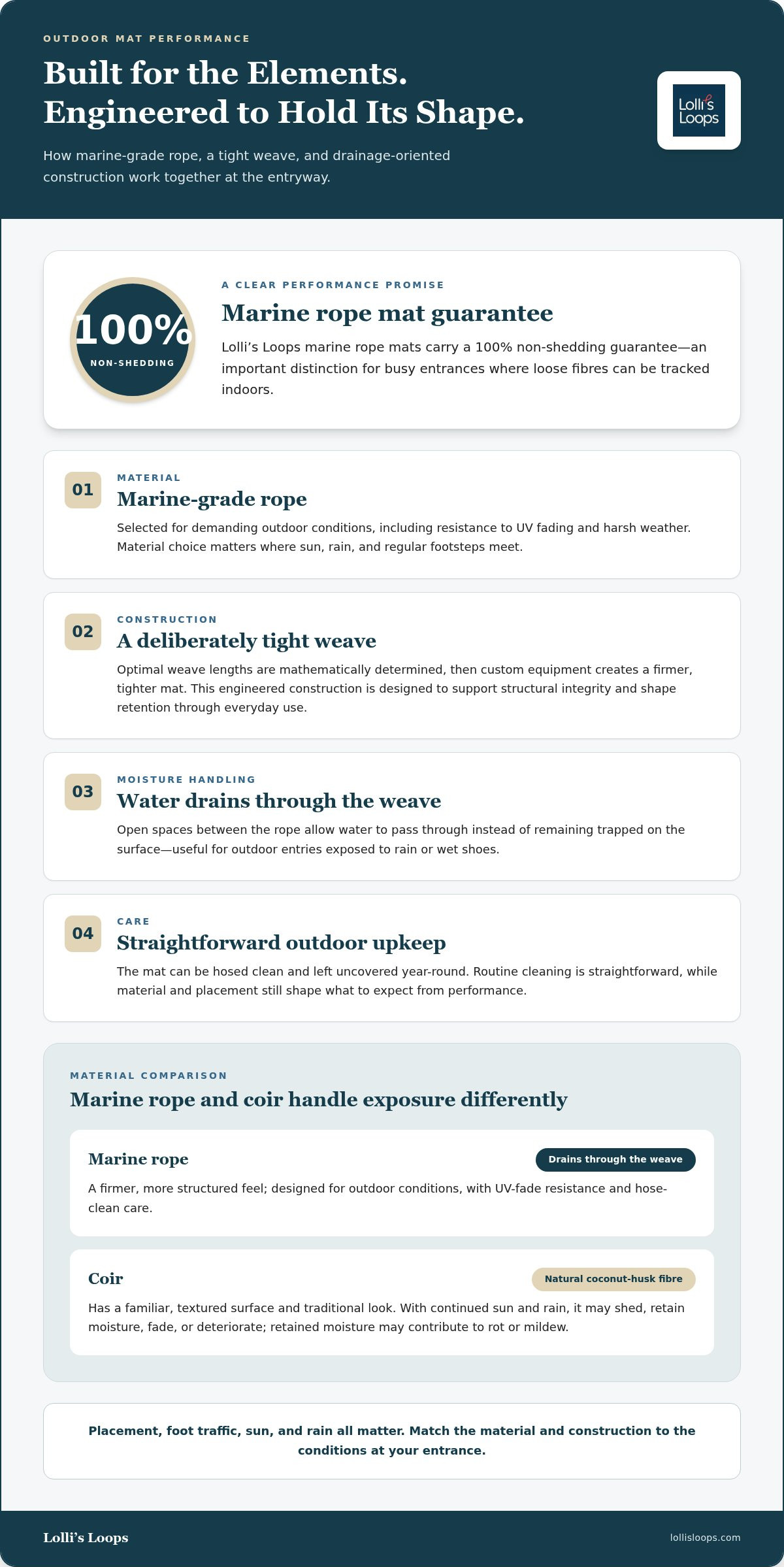
Coir, made from coconut husk fibre, has a familiar natural texture and traditional look. It may suit a sheltered entrance where that tactile, earthy character is the priority. In more exposed settings, coir can shed, retain moisture, fade, or deteriorate with continued sun and rain. Moisture retention may contribute to rot or mildew, and loose fibres can be tracked inside.
Marine rope offers a different feel and care profile. Water drains through the weave, and Lolli’s Loops marine rope mats carry a 100% non-shedding guarantee and can be hosed clean. Those features are useful at entrances that see wet shoes or regular foot traffic. For a closer material-by-material analysis, read the lobster rope and coir mat comparison.
Which entryways suit a rope doormat?
Consider a front door that welcomes daily visitors, a back door used for garden access, or an uncovered patio exposed to the elements. Each setting brings different conditions. Take note of foot traffic, direct sun and rain, and whether the surrounding architecture calls for a quiet accent or a more expressive stripe or wave-inspired design.
Placement sets practical expectations; the home’s lines, finishes, and palette guide the design. A lobster rope mat can serve as an architectural anchor, but it should feel intentional rather than merely nautical. Choose for the way the entrance is used as well as the first impression it makes.
How Marine-Grade Rope and Tight Weaving Shape Mat Performance
A rope mat’s performance comes from more than its material. Marine-grade rope is selected for demanding outdoor conditions, including resistance to UV fading and harsh weather. That matters at an entry exposed to sun, rain, and regular footsteps, where the mat is expected to remain a composed part of the home’s exterior. The Island Institute describes the shift from natural fibres to synthetic rope in lobster fishing, highlighting the strength and durability of synthetic rope in demanding marine use.
Construction matters just as much. A tight weave is more than a decorative pattern: it’s an engineered arrangement that gives the mat a firmer structure. In a lobster matt, rope choice and weave work together to support shape retention, drainage, and dependable outdoor use.
What tight-weave construction contributes
Lolli’s Loops mathematically determines optimal weave lengths, then uses custom equipment to create a firmer, tighter mat. This deliberate method plans the construction rather than relying on a loose arrangement of rope. The result is designed to support structural integrity and shape retention over time.
A tightly engineered weave helps the mat hold its structure through everyday use. That’s the difference between a pattern that merely looks close-knit and construction designed with performance in mind.
How rope drainage and weather resistance affect everyday care
Water passes through the spaces in the rope weave instead of remaining trapped on the surface. This drainage-oriented construction suits outdoor entries where rain or wet shoes are part of daily life. Marine-grade rope is designed to withstand weather and resist UV fading, and the mat can be hosed clean and left uncovered year-round. It still needs care, but routine cleaning is straightforward.
For practical cleaning steps, see the rope doormat care guide. Considering material, weave, and care together helps you decide whether a mat suits its placement. Explore Lolli’s Loops contact information to learn more about the brand.
Lobster Rope or Coir: Which Mat Better Fits Your Priorities?
Coir and marine rope offer distinct textures and practical trade-offs. Coir’s natural, fibrous surface has a familiar, understated appeal. A rope mat has a more structured look, with colors and patterns that can create a deliberate architectural accent. Neither material suits every entrance. Consider how exposed the location is, how much foot traffic it receives, and what kind of care fits your household.
Use this comparison as a starting point, then weigh the conditions at your own door. Performance depends on construction and placement, so material alone doesn’t tell the whole story.
| Consideration | Coir | Marine rope |
|---|---|---|
| Material and feel | Natural coconut-husk fibre with a familiar, textured surface | Durable rope with a firmer, more structured feel |
| Shedding | May shed fibres, especially with use | Lolli’s Loops mats carry a 100% non-shedding guarantee |
| Moisture handling | Can retain moisture, a concern in exposed settings | Water drains through the weave |
| Care | Care needs depend on exposure and the mat’s condition | Can be hose-cleaned |
| Visual character | Natural, traditional texture | Defined rope pattern with curated colors and wave-inspired designs |
When coir may meet the household’s needs
Coir may suit an entrance where its natural texture is central to the look and exposure to rain is limited. Its familiar surface can complement traditional materials and a relaxed porch scheme. Before choosing it, consider how much moisture reaches the mat and how often people cross it. In a sheltered location, its care demands may matter less than they would at an uncovered entrance.
When a lobster rope mat may be the better investment
At an entrance exposed to weather or frequent footsteps, drainage, durability, and shedding may carry more weight. A lobster matt made with marine-grade rope is designed for outdoor conditions, and its drainage-oriented weave lets water pass through. The non-shedding guarantee also matters if you want to limit loose fibres at the threshold. Rope is worth considering when a natural-fibre texture isn’t your priority.
Choose according to the conditions, not a universal ranking. A covered entry and an uncovered patio have different demands, just as a quiet back door differs from a high-traffic front entrance. For more context on construction and material, explore this lobster rope doormat guide.
How to Choose a Lobster Mat for Your Home and Daily Use
A well-chosen rope mat should suit the entrance it serves, not just catch the eye. Work through these considerations to balance everyday performance with a finish that feels intentional.
- Assess placement. Note whether the mat will sit at a front door, back door, or uncovered patio. Direct sun and rain call for different expectations than a sheltered threshold.
- Estimate daily use. Consider how often people cross the entrance and whether wet shoes or regular outdoor access are part of the routine. Frequent use makes durable materials and firm construction especially relevant.
- Set construction priorities. Decide which qualities matter most, such as a tightly engineered weave, water drainage, weather resistance, or non-shedding performance.
- Measure the space. Record the available floor area and check the door’s movement. The mat should fit neatly without interfering with the door as it opens and closes.
- Choose the design. Once practical needs are clear, select colors and a pattern that complement the home’s architecture and surrounding landscape.
Match construction and dimensions to the entrance
Picture the mat in place: at a busy front door, a back entrance used after time outdoors, or an uncovered patio exposed to changing weather. Measure the usable area, then check the door’s clearance across that space. These checks help prevent the mat from feeling cramped or obstructing the threshold. If standard dimensions don’t suit the available floor area, a custom-size doormat can be tailored to the entryway.
Choose a design that complements the architecture
Color and pattern can create a quiet transition or a distinctive focal point. Coordinate the mat with the door, exterior finishes, and nearby planting. Carefully selected gradients and wave-like designs add movement while keeping the palette composed. Browse these best-selling rope doormats for examples of how stripes, color pairings, and flowing forms can shape an entrance.
A made-to-order lobster matt is produced with attention to construction and finish. Allow for the stated production lead time of 4-6 weeks when planning your purchase. With placement, measurements, and design aligned, the mat can feel like a natural extension of the home rather than an afterthought. Explore options for a mat tailored to your entryway.
What to Expect from a Bespoke Lobster Rope Mat
A bespoke lobster rope mat brings together considered materials, engineered construction, and a finish chosen for the home. Made-to-order production gives attention to the weave and design, creating an architectural accent shaped for the practical demands of an entryway. Look beyond coastal character as you evaluate a mat. Consider how its structure, material, and care requirements fit the placement and priorities you identified earlier.
How Lolli’s Loops approaches engineered, handcrafted construction
At Lolli’s Loops, optimal rope lengths are mathematically determined, then custom equipment is used to form a firmer, tighter weave. The construction is planned rather than left to the appearance of a simple woven pattern. The goal is a mat with structural integrity and shape retention, finished with the deliberate color and movement of a gradient or wave-inspired design.
That balance matters at the threshold. Heavy-duty marine-grade rope is selected for outdoor exposure and UV-fade resistance. The drainage-oriented weave lets water pass through, and the mats carry a 100% non-shedding guarantee. Together, these features bring performance and finish into one carefully made entryway piece, beyond nautical styling alone.
Plan for a made-to-order purchase
Made-to-order production requires planning. The current production lead time is 4-6 weeks, so factor that interval into your entryway refresh or project schedule. Before ordering, revisit your measurements, door clearance, and preferred palette. This preparation helps the lobster matt feel proportionate to the entrance and considered alongside the home’s exterior finishes.
For a closer look at a marine rope doormat’s color and pattern, view this blue-and-sand rope doormat. It shows how a coordinated palette can bring definition to an entry without overwhelming its architecture. A bespoke mat is an investment in both use and curb appeal, guided by the details that matter at your door.
Explore a mat suited to your entrance with Lolli’s Loops.
Choose an Entryway Mat That Works Beautifully
The right mat for your home suits its setting, daily use, and architectural character. When choosing a lobster matt, weigh practical details such as exposure, drainage, and shedding alongside the colors and pattern that welcome guests to your door. A considered choice should look at home and perform reliably in its intended place.
Lolli’s Loops combines heavy-duty marine-grade rope with proprietary tight-weave construction, engineered for a firm structure and outdoor use. Each mat carries a 100% non-shedding guarantee. Made-to-order production allows attention to construction and finish, with a current lead time of 4-6 weeks.
Explore the bespoke rope doormat options for your entryway and choose an architectural accent designed to bring resilience and considered style to your threshold.
Frequently Asked Questions
Is a lobster rope mat suitable for an uncovered outdoor entryway?
Yes. A marine rope mat is designed for outdoor use, including uncovered entryways. Heavy-duty marine-grade rope is selected for weather exposure and UV-fade resistance, while the weave allows water to drain through. Lolli’s Loops mats can remain uncovered year-round. Consider how much sun, rain, and foot traffic reach your entrance when choosing a size and design.
Can a lobster rope doormat get wet without holding moisture?
Yes. Water can drain through the rope mat’s weave rather than pooling on its surface. This construction suits outdoor entrances exposed to rain or wet footwear. Drainage doesn’t mean the mat never gets wet; it means water has a path through the weave. The mat can also be hose-cleaned for straightforward routine care.
Does a marine rope doormat shed like a coir mat?
No. Lolli’s Loops gives its marine rope mats a 100% non-shedding guarantee. Coir is a natural coconut-husk fibre and may shed loose fibres with use, which can be tracked indoors. The materials also differ in moisture handling: rope mats are designed to drain water through the weave, while coir can retain moisture. Consider both factors when choosing for your entrance.
How do you clean a lobster rope mat?
Hose-cleaning is a simple way to clean a Lolli’s Loops rope mat. Rinse away dirt and debris, allowing water to pass through the drainage-oriented weave. The mat is designed for outdoor use and can remain uncovered year-round, but it still needs care. Regularly removing accumulated dirt helps keep the entrance looking considered and welcoming.
What should I measure before choosing a lobster mat for my front door?
Measure the usable floor area where the mat will sit, including its available width and depth. Then check the door’s full movement to make sure it clears the mat as it opens and closes. Consider nearby trim or thresholds that affect placement, too. These measurements help you select a proportionate mat that fits the entry without obstructing the door.
How long does a made-to-order rope doormat take to produce?
The current production lead time for a made-to-order Lolli’s Loops mat is 4-6 weeks. Build that timeframe into your plans if you’re preparing for an entryway refresh or coordinating the mat with other home projects. Made-to-order production allows attention to construction and finish, so have your placement, measurements, and preferred design in mind as you plan.
Can a lobster rope doormat be made to fit a custom-sized entryway?
Yes. Lolli’s Loops offers custom-size doormats tailored to entryway dimensions. Measure the available floor area and check door clearance before deciding on the size. Accurate measurements help the mat fit the space while maintaining a balanced look at the threshold. Consider the entrance’s exposure and daily use alongside dimensions so the finished choice suits both the architecture and household routine.