Foyer Door Mat Guide: Create a More Welcoming Entry
A foyer can be beautifully furnished and still feel unfinished at the threshold. The right foyer door mat does more than catch the eye: it welcomes guests, grounds the entry, and connects the home’s architecture with its palette. It’s a small detail with a distinct presence.
Choosing one means balancing appearance with the realities of the space. Start with the doorway, the clear floor area, and the route people take inside. Then consider how the mat’s material, construction, color, and pattern will work with the home’s finishes and your household’s routine.
This guide explains how to assess placement, proportion, and style, including what to consider when choosing an engineered marine-rope design. The aim is a welcoming threshold that feels less like an afterthought and more like an architectural anchor.
Key Takeaways
- Choose a foyer door mat with a scale and visual weight suited to the entrance, rather than treating it as an afterthought.
- Check the door swing and walking route before settling on placement.
- Use the home’s architecture and palette to choose between a restrained neutral, a coordinated stripe, or a fluid pattern.
- Consider how people use the entry each day, then choose a mat that suits those routines as well as guest arrivals.
- Look beyond appearance: material and weave affect how a mat performs at the threshold.
What Does a Foyer Door Mat Add to a Welcoming Entry?
A foyer door mat is a functional threshold accent that gives the entrance a clear first impression. It marks the transition from outside to inside, offers a surface for pausing or wiping shoes, and introduces texture or color before guests see the rest of the home.
That role is modest, but meaningful. A mat won’t create a welcoming foyer by itself, just as a console or light fixture can’t manage the entire arrival experience alone. The welcome comes from how these elements work together: the path is easy to read, the doorway feels composed, and the details suggest care without crowding the space.
The threshold as the first moment of hospitality
Guests encounter the threshold before they take in the foyer’s furnishings or the rooms beyond it. A clear, considered entrance helps them understand where to step and where the interior begins. The mat can give that transition a visual center, lending the doorway intention rather than leaving it as an unadorned passage.
Consider the difference between a mat placed neatly in relation to the door and one that drifts into the walking route. The first helps the entry feel settled. That small signal of order can make an arrival feel more thoughtful, without asking the mat to direct anyone’s behaviour or carry the whole atmosphere of the home.
Function and atmosphere belong together
An entry accent can serve a practical purpose while contributing to the room’s character. It can offer a defined place to pause or wipe shoes, while its color, pattern, and texture relate to nearby flooring, woodwork, or furnishings. That connection helps the threshold feel like part of the foyer, not an afterthought.
Consider function and style separately before bringing them together. Function depends on the routines at your door and the available floor area. Style depends on the architecture and the mood you want the entrance to convey. A quiet neutral can recede into a stone or wood palette, while a stripe or flowing pattern can give a restrained foyer a deliberate point of emphasis.
Think of the mat as one part of an arrival sequence, not a solution to every entryway need. Storage, lighting, and clear circulation also shape how the foyer works. Together, they can make the room feel ready for daily comings and goings as well as a guest’s first visit.
- Practical role: Establishes a defined place at the threshold for pausing or wiping shoes.
- Design role: Adds texture, color, or pattern that can relate to the home’s materials and architecture.
- Room-planning role: Gives the entrance a visual focus while leaving the route through the foyer clear.
The most considered choice respects both sides of the threshold: everyday movement through the doorway and the impression the entrance makes. Begin with the foyer’s function, then let its proportions and surrounding finishes guide the mat’s visual presence.
How to Arrange a Foyer Door Mat Around Guest Flow
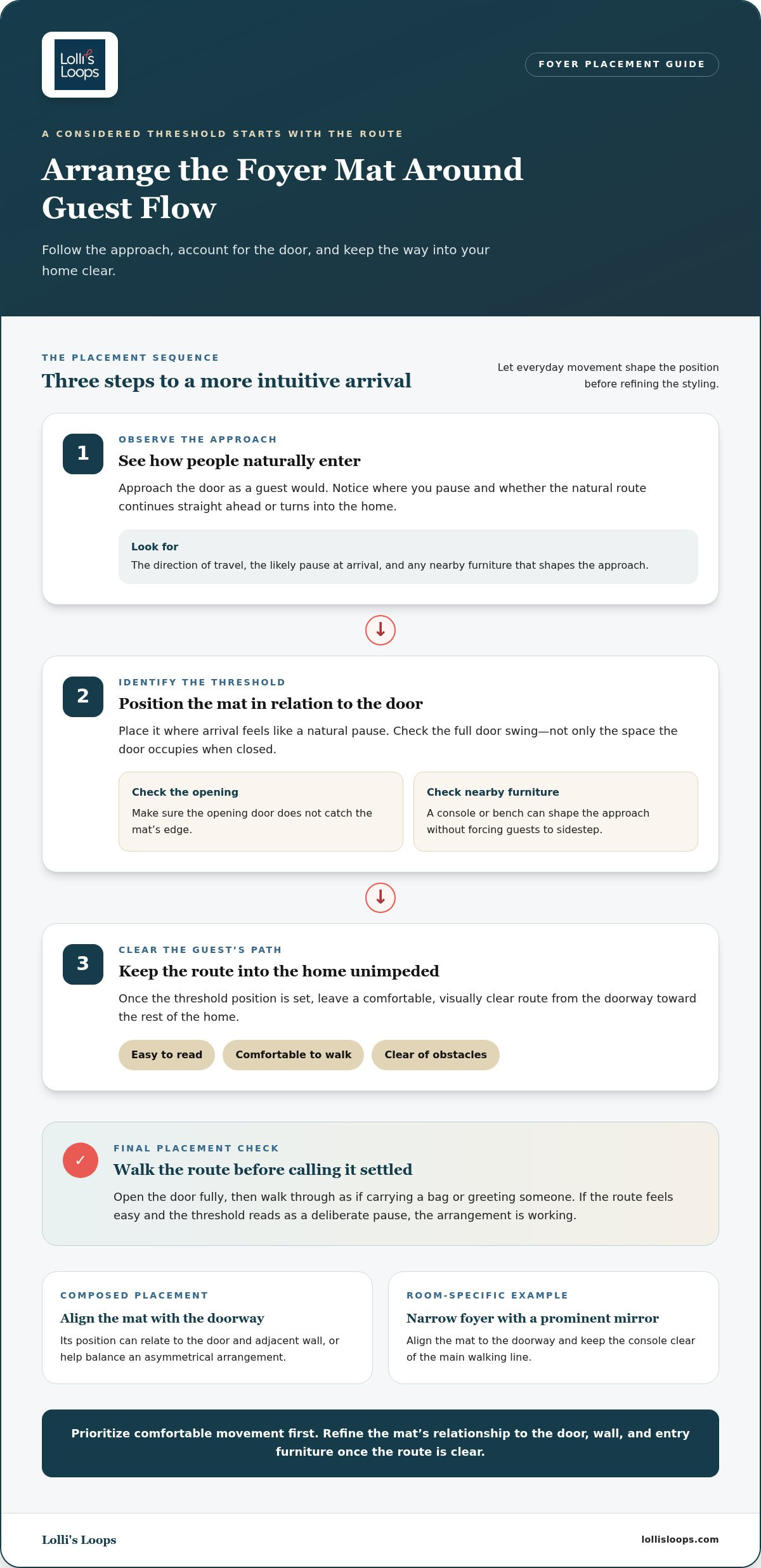
Placement works best when it follows the way people actually enter. Before settling on a position, approach the door as a guest would. Notice where the door opens, where you naturally pause, and which route leads comfortably into the home. This reveals whether the mat belongs directly at the threshold or should sit elsewhere to keep movement clear.
Observe the approach, identify the threshold, then clear the guest’s path. This three-step sequence brings order to a foyer mat arrangement.
Make arrival feel intuitive
Watch how the entrance is used during an ordinary arrival. Does the door open toward a wall, a console, or an open stretch of floor? Is the easiest route straight ahead, or does the room invite guests to turn? The answers help you position the mat where it feels like a natural pause, not an obstacle. Keep the route from the doorway into the home physically and visually clear.
Account for the full door swing, not just the space the door occupies when closed. A mat that catches the edge of an opening door can make the threshold awkward. Nearby furniture matters, too. A console or bench may shape the approach, but shouldn’t force guests to sidestep around the mat. Prioritize comfortable movement before fine-tuning the styling.
Build a composed entry around the threshold
Once the route is clear, consider how the mat relates to the door, adjacent wall, and entry furniture. Its position can align with a doorway or help balance an asymmetrical arrangement. Architectural principles for entryway design also consider transitions, scale, and material consistency, useful ideas when deciding how the threshold belongs within the larger room.
Restraint helps the entrance remain legible. If a sculptural console already draws the eye, let the mat provide a quieter foundation. If the wall and floor are simple, a more expressive pattern can define the arrival point. For example, a narrow foyer with a prominent mirror may feel composed with the mat aligned to the doorway and the console clear of the main walking line. The best arrangement depends on the room, not a fixed formula.
- Approach: Notice the natural direction guests take as they reach the door.
- Threshold: Place the mat in clear relation to the doorway and door swing.
- Path: Leave an unimpeded route toward the rest of the home.
After placing the mat, open the door fully and walk through as though carrying a bag or greeting someone. If the route feels easy and the threshold reads as a deliberate pause, the arrangement is working. For a bespoke accent shaped around your entry, share your foyer vision with Lolli's Loops.
How to Coordinate a Foyer Door Mat with Your Home’s Architecture
A well-chosen foyer door mat should feel connected to the architecture, not simply placed in front of it. Look at the door finish, flooring, hardware, and nearby details as a composition. Then decide whether the threshold should blend quietly into that visual language or introduce a measured contrast.
Match the mat to the home’s visual language
Continuity brings calm. In an entry with pale stone, natural wood, and understated hardware, a restrained neutral can preserve the material palette while adding texture. Contrast can be just as composed: a darker accent against a light floor gives the threshold definition, especially when its color relates to existing ironwork or door hardware. Draw from colors already present rather than introducing a new one without context.
Use the table as a starting point, not a set of rules. Architectural character, natural light, and nearby furnishings all influence how a color or pattern reads in the space.
| Architectural mood | Palette direction | Visual emphasis |
|---|---|---|
| Quiet, material-led | Soft neutrals drawn from stone, wood, or plaster | A subtle foundation that lets finishes lead |
| Classic and tailored | A coordinated stripe echoing door or hardware tones | Order and gentle definition at the threshold |
| Relaxed and expressive | Related hues arranged in a fluid pattern | Movement and a distinctive focal point |
Choose a visual rhythm that suits the entrance
Pattern has its own architecture. A restrained stripe can reinforce the foyer’s lines, complementing a paneled door or long floorboards without competing for attention. A wave-like design brings softer movement, a natural counterpoint to strong geometry. Pattern scale matters, too: a fine, quiet rhythm tends to recede, while broader movement gives the threshold greater presence.
Keep the overall balance in view. If the foyer already contains patterned flooring, carved details, or a striking console, a quieter mat can let those features breathe. In a simpler entrance, a fluid pattern can supply character without requiring a crowded arrangement of accessories.
For examples of how rope construction and pattern meet, browse handcrafted rope doormat designs. The collection includes stripe and wave-like designs that can help you decide whether the threshold calls for measured rhythm or more expressive movement. Let the architecture set the tone. The mat should complete the composition, not compete with it.
How to Choose a Foyer Door Mat: A Practical Styling Sequence
A considered choice begins before browsing. First decide what the entrance needs to do for the people who use it, then let the home’s architecture guide the visual direction. This keeps a foyer door mat from becoming a decorative afterthought and helps you select an accent that feels intentional in daily use and in the finished room.
Use this four-step sequence to bring function and style into focus:
- Define the foyer’s role. Consider whether it’s a quick passage, a place to pause, or the main arrival point for family and guests.
- Observe the architecture. Take in the door, flooring, hardware, natural light, and nearby furnishings as one composition.
- Choose a visual direction. Decide whether a quiet neutral, a coordinated stripe, or a fluid pattern best suits the room.
- Review placement. Check that the mat relates naturally to the threshold and leaves the route through the entry clear.
Start with the people and routines using the foyer
Notice how household members arrive with bags, keys, or parcels, and where a guest might pause while being greeted. Does the entry invite people to move straight through, or is there room to stop without interrupting the flow? These practical prompts reveal what the threshold needs to support. Prioritize a useful, uncluttered route before adding decorative layers.
Refine the look before choosing the final accent
Compare the foyer’s finishes with a few deliberate directions. A neutral can sit quietly among natural materials; a stripe may echo a strong architectural line; a wave-like design can soften a structured interior. Edit nearby accessories as you decide, whether pairing the threshold with curated wall art from American Luxury Gifts or letting the floor remain the sole focal point. A single considered accent often gives the entry more presence than several competing details.
Keep sizing in proportion to the doorway and available floor area without letting the mat dominate the passage. Before choosing, map the clear floor space and check the door swing so the mat won’t obstruct either. For a precise fit, consult a dedicated entryway mat size guide alongside these styling decisions. If you’re weighing patterns and colors, explore handcrafted rope doormat designs for considered examples of stripes and flowing motifs.
Finally, revisit the space from the perspective of someone arriving. The threshold should feel connected to the home, while the path onward remains easy to read. For a distinctive entry, discuss your foyer mat with Lolli's Loops.
A Handcrafted Foyer Door Mat as an Architectural Finishing Detail
A mat can do more than mark the threshold. In a considered foyer, it brings material, pattern, and everyday purpose into one grounded detail. Lolli's Loops makes handcrafted, made-to-order marine-rope doormats designed to complement an entry’s architecture while serving as a practical accent. The appeal lies not only in the finished surface, but also in the deliberate construction beneath it.
What engineered rope construction brings to the threshold
Lolli's Loops uses custom equipment and a proprietary process to mathematically determine optimal rope lengths. This supports a tighter, firmer construction designed to retain its shape. The mats are made with heavy-duty, marine-grade rope, carry a 100% non-shedding guarantee, allow water to drain through the weave, and can be hose-cleaned.
Those features make construction part of the design conversation. A defined weave gives the mat a substantial, composed presence at the door, while the rope’s texture adds depth without requiring a busy pattern. Material choice still depends on the setting and the look you want. When comparing rope with traditional coir, consider how each material’s texture and performance suit your entry and routine. Traditional coir can shed, retain moisture, rot, fade, and blow away in coastal environments, concerns a marine-rope design is made to address.
A considered next step for a bespoke entry
Color and pattern bring the final character. Lolli's Loops designs include coordinated gradients and wave-like patterns, offering visual movement that can soften a formal threshold or complement a relaxed architectural palette. These are design directions, not fixed rules: the right choice depends on the surrounding finishes and how much emphasis the entrance can carry.
Each mat is made to order, with a considered approach to material and construction. The current production lead time is 4 to 6 weeks. Allowing for that timeframe can help you plan an entryway update alongside other design decisions, so the threshold accent feels integrated rather than added at the last moment.
A handcrafted foyer mat can unite practical use with architectural presence. Consider the doorway, nearby materials, and the mood you want guests to encounter. Those details offer a thoughtful starting point for a bespoke piece.
To discuss a mat that reflects your foyer’s character, contact Lolli's Loops.
Give Your Entryway a Thoughtful Next Step
Before making a final choice, look at your entrance from outside, then from the first point where the interior opens into view. A quick photograph can reveal color relationships and visual interruptions that are easy to miss while standing in the room. Decide what you want the arrival to communicate: quiet ease, crisp definition, or a more expressive welcome. That intention gives the foyer door mat a clear design role and helps keep surrounding details purposeful.
Then let the decision belong to the house. A threshold accent should feel at ease with your home’s character, not compete for attention. Bring together your routines, the architectural cues, and your considered taste. The most satisfying choices often come from noticing what’s already there, then adding only what completes the scene.
Ready to shape an entry accent around your home’s character? Discuss a bespoke foyer mat with Lolli's Loops. A thoughtful threshold is a gracious beginning, and the right detail can make arriving home feel distinctly your own.
Frequently Asked Questions
Is a foyer door mat necessary if I already have a mat outside?
Not necessarily, but an outdoor mat and a foyer door mat can serve different moments of arrival. The exterior mat sits before the door; an indoor mat can mark the transition once guests step inside. In a home where the entry opens directly into a living area, that distinction may help the interior feel intentional. In a compact vestibule, one mat may suit the layout and household routine just as well.
Can a foyer door mat work in a small entryway?
Yes. Even a modest entry can benefit from a defined threshold accent, provided the door opens comfortably and the route into the home stays clear. Consider what already occupies the floor: a slim console, a shoe tray, or a nearby bench can change how much visual space remains. If the arrangement feels crowded from the doorway, simplify the surrounding furnishings rather than forcing in another layer.
What should a foyer door mat say about your home?
It can suggest the home’s character, but it’s only one part of the first impression. Let the architecture, palette, and level of formality shape the choice. A restrained neutral beside natural wood can feel quietly coordinated; a deeper tone against pale flooring can make the threshold more distinct. Neither approach is inherently better. Choose the one that feels consistent with the rooms guests are about to enter.
How do I make a foyer feel welcoming before guests arrive?
Make the entrance easy to understand at a glance. Clear loose items from the door area, leave an open route into the home, and give guests a natural place to pause while you greet them. A coat hook or small surface for keys can help the space feel prepared, as long as it doesn’t crowd the doorway. Soft, balanced lighting can also make the arrival feel more considered.
Can I layer a foyer door mat with an entryway rug?
Layering is optional, not essential. It can add depth when the textures and patterns feel related, such as a quiet mat paired with a subtly patterned rug. Before keeping both, view the arrangement from the entrance and consider whether the layers compete with the flooring or interrupt the route through the foyer. A single well-chosen accent may create a calmer composition in a visually busy space.
Should a foyer door mat match the front door?
No. The mat can relate to the door without repeating its color exactly. Echo a finish or undertone for continuity, or introduce a considered contrast to give the threshold more definition. For example, a muted mat can complement a richly finished door, while a tonal stripe might connect a painted door to the flooring. Judge the full entry together, including hardware, wall color, and nearby materials.